

This content is for informational and entertainment purposes only, not financial advice. Trading involves risk and is not suitable for all investors. This article may contain affiliate links, which means Pro Trading Insights may earn a commission if you sign up through a link. For full details, see our Affiliate Disclosure and Full Disclaimer.
Quick Verdict: Trader NXi is a Thai-language orderflow and footprint-chart training brand built around reading volume, market participation, smart money intent, imbalance, live guidance, Discord discussion, and structured tutorials. It is strongest for traders who want to move beyond candlestick-only analysis and learn what is happening inside the candle through orderflow and volume context.
Best fit: Futures traders, active intraday traders, Thai-speaking students, footprint-chart learners, volume-analysis traders, and people who want live Zoom and Discord support while learning orderflow.
Best Fit Snapshot
| Core benefit | Orderflow and footprint-chart education with tutorials, Discord access, live Zoom sessions, volume analysis, smart money concepts, and trader guidance. |
| Strongest reason to join | Trader NXi helps members understand what price action alone can hide: volume, imbalance, market pressure, and the activity behind each candle. |
| Good match if | You want a clearer way to study orderflow, footprint charts, volume behavior, reversal areas, and real-time market participation. |
| Best way to use it | Study the tutorials, attend live guidance when available, ask questions in the community, and test orderflow concepts slowly before using them in live trades. |
Table of Contents
I. What Is Trader NXi?
Trader NXi is a Thai-language trading education brand built around orderflow, footprint charts, volume analysis, and live trading education. The course family includes Orderflow Footprint, Orderflow Training Pro 2025, and Next Gen orderflow training paths for traders who want to understand market movement beyond normal candlestick charts.
The core idea is simple but deep: price alone shows where the market moved, while orderflow helps a trader study how the move formed. Instead of only looking at candles, a trader can study volume, aggression, imbalances, and participation at specific price levels.
That makes Trader NXi especially relevant for active futures and intraday traders. If you have ever looked at a candle and wondered whether the move had real strength behind it, orderflow is the type of analysis designed to answer that question with more detail.
Trader NXi is also useful because much of the source material and public feedback is Thai-language. For Thai-speaking traders, that matters. Orderflow can be technical, and learning it in a language that makes the concepts easier to understand can reduce friction.
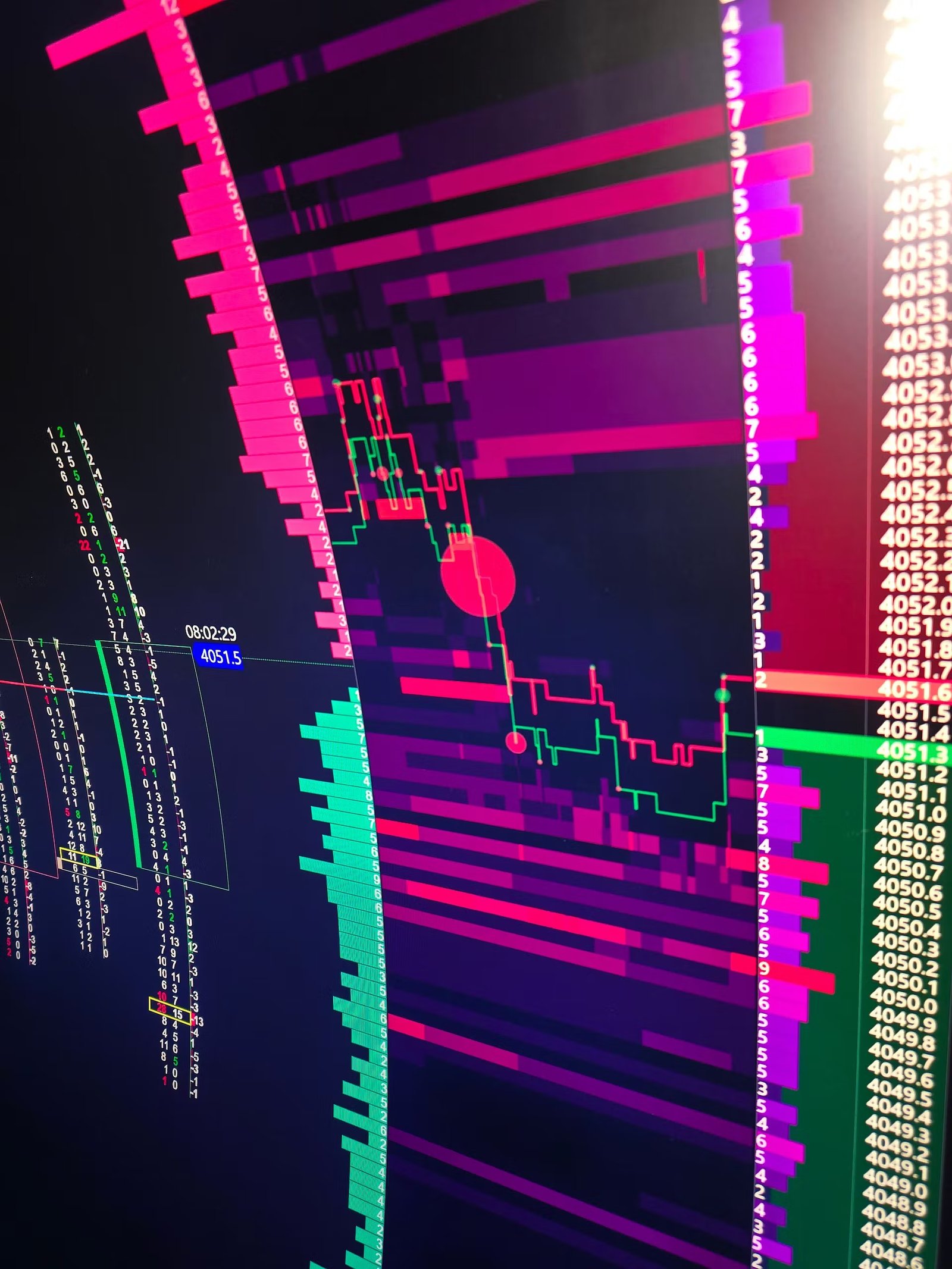
A. Why orderflow feels different from normal charting
Candlestick analysis can be useful, but it compresses a lot of activity into a simple shape. A candle can show open, high, low, and close, but it does not clearly show where aggressive demand appeared, where supply absorbed the move, or where volume concentrated inside the candle.
Orderflow adds another layer. It helps traders study participation, pressure, and interaction at specific levels. That can make a chart feel less mysterious because the trader is not only asking what price did. They are asking what happened during the move.
B. Why this can appeal to serious learners
Orderflow is not the easiest form of trading education. It has terminology, data requirements, platform requirements, and interpretation risk. That is exactly why a structured course can be valuable. Without guidance, a new trader can stare at numbers and colored blocks without understanding what they mean.
Trader NXi is most useful for people who are willing to study. This is not a casual signal feed. It is a training path for traders who want to read markets with more depth.
C. Why platform and datafeed setup matters
Orderflow education is different from a normal chart course because the data matters. A member may need the right platform, the right market feed, and the right chart settings before the lessons make sense. If the data is delayed, incomplete, or configured poorly, the footprint chart can become confusing.
That is why setup questions should be treated as part of the course, not as a side issue. Before judging any orderflow method, a member should understand what platform is being used, what data is required, how the chart is configured, and what the teacher expects members to see on screen. This can save a lot of frustration for traders who are new to footprint tools.
II. Orderflow, Footprint Charts, and Volume
A footprint chart shows more detail than a standard candle. It can display volume traded at individual price levels inside a bar, helping traders evaluate demand, supply, aggressive activity, and possible absorption.
For example, a normal candle may look bullish because it closes near the high. A footprint chart may show whether the move had strong participation, whether selling pressure was absorbed, or whether the candle was less convincing than it looked. That added context is the reason orderflow attracts advanced intraday traders.
A. Volume as market evidence
Volume matters because it shows participation. A move with strong participation can mean something different from a move with thin activity. In orderflow training, traders learn to study where volume appears, how price reacts to it, and whether the market accepts or rejects certain areas.
That is useful for entries, but also for trade management. If price reaches a level and participation changes, a trader may need to reassess. Orderflow does not make the decision automatic, but it can provide more evidence.
B. Imbalance and absorption
Two concepts that often appear in footprint education are imbalance and absorption. Imbalance is when one side of activity is meaningfully stronger at a price area. Absorption is when pressure appears but price does not continue as expected, suggesting that the opposite side may be absorbing the move.
These concepts are powerful when understood correctly, but they can be misread. A trader should not treat every imbalance as a trade. The stronger approach is to combine orderflow with structure, context, risk, and timing.
C. The danger of overreading every print
One of the biggest mistakes with orderflow is treating every number as a signal. Footprint charts show more information than candlesticks, but more information can also create more temptation. A trader may begin reacting to every change in volume, every small imbalance, or every fast move.
A better approach is to decide what matters before the market starts moving. Which levels are important? What kind of activity would confirm the idea? What would invalidate it? What market condition makes the setup lower quality? Trader NXi can be valuable when the training helps members answer those questions instead of simply adding more data to the screen.
III. Course Structure, Discord, and Live Zoom
Trader NXi includes education around orderflow and footprint trading, with access elements such as tutorials, Discord chat, live Zoom sessions, and guidance. That combination matters because orderflow can be difficult to learn from static lessons alone.
A tutorial can explain the terms. A live session can show how those terms appear in real markets. A community can help members ask questions when the chart does not match the textbook example.
A. Tutorials and learning path
The tutorial side is important for foundation. A trader needs to understand the basic language before trying to read a fast-moving footprint chart. That includes volume, delta-like pressure concepts, imbalance, absorption, price levels, and the relationship between structure and executed activity.
Trader NXi also has related learning routes around masterclass, foundation, institutional orderflow coaching, VWAP, and Fibonacci-style education. That gives the brand a broader education ecosystem around active trading.
B. Discord and live Zoom guidance
Discord and live Zoom access can make the course more practical. If a member gets stuck, they can ask questions. If a live session reviews market movement, the member can connect the lesson to actual chart behavior.
That support layer is valuable because orderflow mistakes are often interpretation mistakes. A trader may see a large number or bright imbalance and assume the meaning is obvious. In reality, context matters. Guidance helps members learn when a signal matters and when it is just noise.
C. Why repeated examples matter
Orderflow is a pattern-recognition skill. A single lesson can introduce the idea, but repeated chart examples help the concept become usable. Members should expect to review many examples before the chart starts feeling natural.
That is where live sessions and community questions can matter. A member can watch how the same concept appears in different market conditions, then ask why one example was worth attention and another was not. That kind of repetition is difficult to replace with a short article or a single static screenshot.
For broader community comparison, PTI’s guide to the best trading Discord servers can help compare Trader NXi with other trading education communities.
IV. Smart Money Concepts and Entry Confirmation
Trader NXi’s positioning connects orderflow with big orders, institutional intent, smart money ideas, and reversal points. The useful part of that framing is the desire to understand what stronger market participants may be doing. The important caution is that orderflow is still interpretation, not certainty.
Retail traders often want a tool that reveals exactly what institutions are doing. That is not realistic. What orderflow can do is provide more detailed evidence about activity, volume, and pressure than a normal candle gives.
A. Confirmation instead of prediction
The best use of orderflow is confirmation. A trader can already have a market idea from structure, trend, or key levels, then use footprint data to see whether the market behavior supports the idea.
That is healthier than forcing the footprint chart to create every trade. Orderflow should help confirm or reject a setup, not turn every candle into a decision.
B. Why risk control still matters
Orderflow can make a trader feel more informed, but more information does not remove risk. The market can reverse, accelerate, or behave differently from what the data seems to suggest. A trader still needs stops, sizing rules, session awareness, and a plan for invalidation.
This is especially true for fast markets. A footprint chart can reveal activity, but the trader still has to execute calmly and avoid overreacting to every print.
For a broader risk framework, PTI’s trading risk management strategies guide is a useful companion before applying any orderflow setup.
V. What Public Reviews Highlight
Public reviews around Trader NXi are mostly Thai-language and strongly focused on education quality, orderflow clarity, live trading, and the feeling that the course opens a new way to read the market. The recurring pattern is not just excitement about a course. It is that members describe learning what happens inside a candle and how volume can improve context.
| Public review theme | What it suggests for members |
|---|---|
| Rare Thai-language orderflow training | The course fills a clear language and education gap for Thai-speaking traders. |
| Reading inside the candle | Members value learning what volume and orderflow reveal beyond a normal candle shape. |
| Live trading and practical examples | Live sessions appear to help members connect course concepts to real market behavior. |
| Clear coaching | Reviews point toward understandable teaching and the ability to ask questions. |
That review pattern supports the strongest case for Trader NXi. The value is not only the information. It is the structured explanation of a technical trading style that many traders find difficult to learn alone.
VI. How Different Traders Can Use Trader NXi
Trader NXi can fit several trader profiles, but the best use depends on experience level.
A. Beginners to orderflow
Beginners should start with definitions. Learn what footprint charts show, what volume means, how imbalance is interpreted, and why context matters. Do not rush to use every concept in live markets immediately.
The best beginner approach is to study examples, then replay charts or review screenshots slowly. The goal is to train your eyes before trying to execute in real time.
B. Price-action traders
Price-action traders may find Trader NXi useful because orderflow can add confirmation. If a trader already understands structure, support, resistance, and trend, footprint data can provide another layer of evidence.
This does not mean price action becomes useless. The stronger approach is to combine structure with volume and orderflow rather than replacing one method with another.
C. Active futures traders
Active futures traders may get the most practical value because orderflow tools are often used for intraday markets where volume and participation matter. These traders should use Trader NXi to refine entries, manage risk, and understand when market pressure is changing.
They should also stay selective. More data can lead to overanalysis. A clean plan matters more than watching every number on the screen.
VII. First-Week Plan for New Members
The first week inside Trader NXi should be focused on orientation. Start by confirming the exact course route, platform requirements, datafeed expectations, Discord access, and live session schedule. Orderflow education often depends on having the right tools and data.
Next, learn the vocabulary. Do not skip straight to live trading examples if the basic terms are still confusing. Understand footprint charts, volume, imbalance, absorption, market pressure, smart money framing, and reversal logic.
Then watch examples slowly. Pause the lesson, write down what the chart is showing, and ask why the coach is paying attention to a specific level. If live Zoom sessions are available, use them to ask clear questions.
Finally, build a testing routine. Before applying orderflow to live trades, review examples, mark levels, compare candle structure with footprint data, and write down what would invalidate the idea. This helps turn the course into skill instead of just information.
Keep the first week simple. Pick one orderflow concept, one market, and one session to review. A narrow focus makes the data easier to understand and prevents the chart from becoming a wall of numbers with no clear lesson. Add more concepts only after the first one feels usable. That patience matters with a dense toolset, fast-moving markets, and daily practice routines.
VIII. Trader NXi FAQ
A. What is Trader NXi?
Trader NXi is a Thai-language trading education brand focused on orderflow, footprint charts, volume analysis, smart money concepts, Discord support, tutorials, and live Zoom guidance.
B. What is Orderflow Training Pro 2025?
Orderflow Training Pro 2025 is part of the Trader NXi course family, focused on helping traders understand orderflow, footprint charts, and market activity beyond standard candlestick analysis.
C. Is Trader NXi good for beginners?
It can be useful for beginners to orderflow, but the topic is technical. New members should start with the foundation material, vocabulary, and examples before using orderflow in live trading.
D. Does Trader NXi include live support?
Trader NXi course context includes Discord chat and live Zoom guidance, which can help members ask questions and connect lessons to live market examples.
E. What do public reviews say about Trader NXi?
Public reviews commonly highlight Thai-language orderflow education, clear coaching, live examples, volume understanding, and a new way to read market activity.
F. Does orderflow remove trading risk?
No. Orderflow can add useful market context, but traders still need risk rules, platform understanding, position sizing, and discipline.
IX. Final Take
Trader NXi is worth considering if you want Thai-language orderflow and footprint-chart education with tutorials, Discord support, live Zoom guidance, volume analysis, and a more detailed way to study market participation. The strongest reason to join is the depth of the topic combined with structured teaching.
The best fit is a trader who wants to learn, not just receive calls. Orderflow takes effort. It can help traders understand what price action may hide, but it requires practice, platform familiarity, and careful risk control.
If you are searching for a Trader NXi review, Orderflow Footprint review, Orderflow Training Pro course review, Trader NXi Whop review, Thai orderflow course, footprint chart training, volume trading course, smart money orderflow training, or live Zoom futures trading education, Trader NXi is a relevant course family to compare.
