

This content is for informational and entertainment purposes only, not financial advice. Trading involves risk and is not suitable for all investors. This article may contain affiliate links, which means Pro Trading Insights may earn a commission if you sign up through a link. For full details, see our Affiliate Disclosure and Full Disclaimer.
Quick Verdict: The TSTH Buy/Sell Indicator is a strong fit for traders who want structured TradingView signals paired with The Stock Trader Hub’s broader community context. The indicator is designed to help traders identify potential market opportunities through buy/sell signals and trend-based analysis, while TSTH adds alerts, market insights, Discord discussion, live trading context, watchlists, bots, and educational support.
Best fit: traders who already use charts or TradingView and want buy/sell signal support, multi-market alerts, community discussion, and risk-aware context across stocks, options, crypto, and futures.
Best Fit Snapshot
| Core benefit | TradingView-based buy/sell signals, trend analysis, community context, alerts, watchlists, bots, and market education from The Stock Trader Hub. |
| Strongest reason to join | TSTH can help members combine indicator signals with human market context instead of relying on a chart signal alone. |
| Good match if | You want chart-based buy/sell signal support, Discord discussion, stock and options alerts, crypto/futures context, and ongoing market updates. |
| Best way to use it | Treat signals as decision prompts, confirm them with trend, market context, risk rules, and community discussion before acting. |
Table of Contents
I. What Is The TSTH Buy/Sell Indicator?
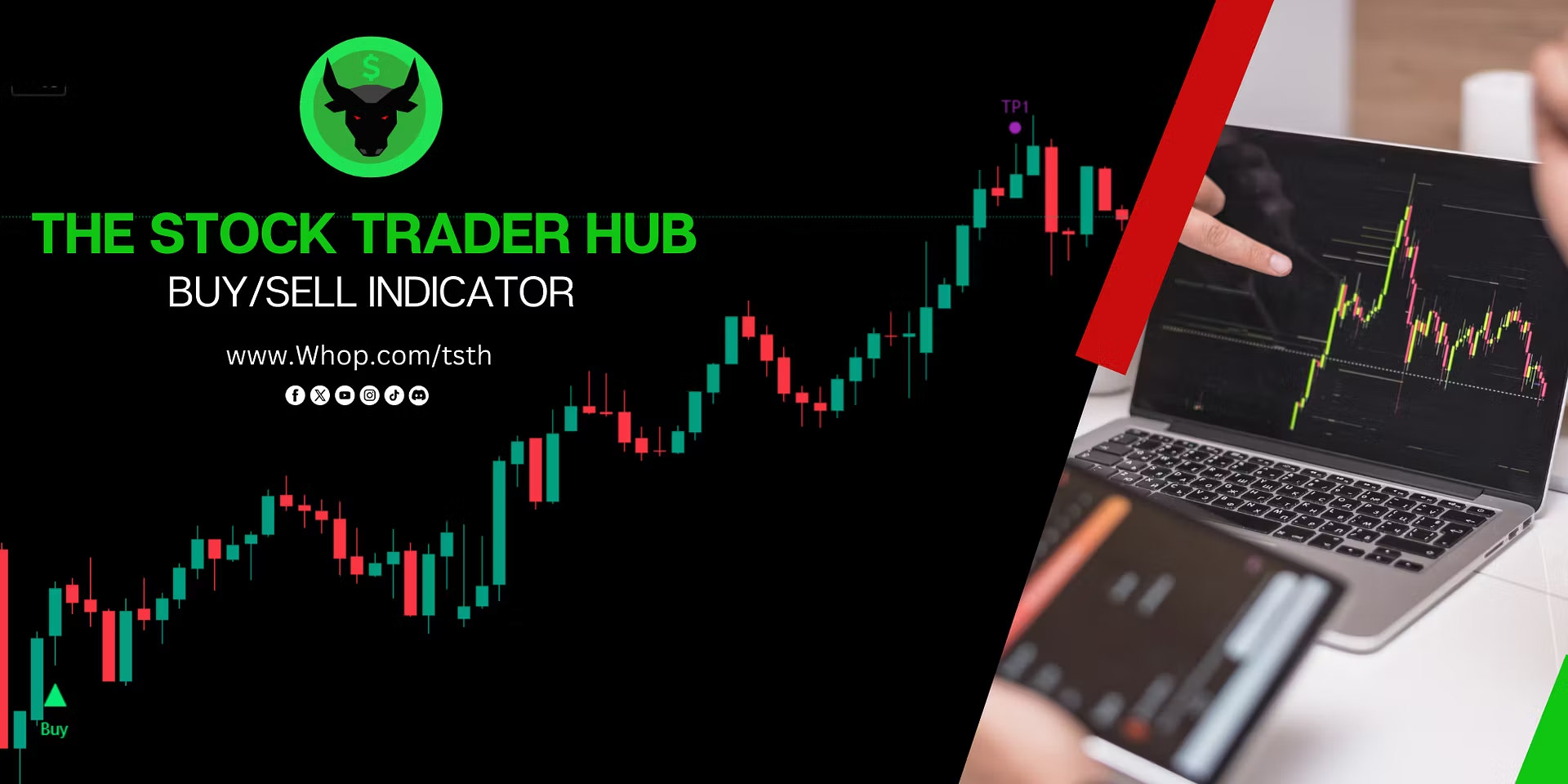
The TSTH Buy/Sell Indicator is a TradingView-based indicator connected to The Stock Trader Hub. It is designed to help traders identify potential market opportunities using structured buy/sell signals and trend-based analysis. The important phrase is potential market opportunities. An indicator can help organize a chart, but it should not replace judgment.
A buy/sell indicator is a tool that marks possible moments where a trader may want to pay closer attention. It can help highlight a trend shift, momentum change, or chart condition that deserves review. The signal itself is not the full trade. A trader still needs to evaluate the market, time frame, volume, broader trend, risk, and whether the setup fits their plan.
TSTH becomes more interesting because the indicator is not isolated from the broader community. The Stock Trader Hub also includes active trading alerts, market insights, Discord discussion, daily live trading context, market scanning bots, weekly watchlists, target price alerts, risk-management education, and coverage across stocks, options, crypto, and futures.
That combination can be useful because indicators work best with context. A signal may look strong on a chart, but a live discussion, market update, or watchlist note can help a member understand whether the idea fits the current session. That is the difference between using the indicator as a guide and using it as an automatic button.
A. Why TradingView context matters
The TSTH indicator is built for TradingView, which matters because many traders already use TradingView for charts, watchlists, alerts, and technical analysis. An indicator is most useful when it fits naturally into the charting workflow a trader already understands.
For readers comparing platforms, PTI’s TradingView review can help explain why TradingView is such a common home for indicators. The platform makes it easier to monitor charts, apply scripts, set alerts, and review multiple markets in one place.
The practical value of the TSTH Buy/Sell Indicator is clarity. It can give a trader a visual prompt on the chart. The trader still has to decide whether the signal agrees with the larger trend, whether the market is clean enough to trade, and whether the risk makes sense.
B. Indicator signals are prompts, not commands
The most important rule with any buy/sell indicator is that a signal should be treated as a prompt. It is a reason to look closer, not a command to enter. This is especially true when trading options, crypto, or futures because those markets can move quickly and punish rushed decisions.
A better workflow is simple. See the signal, check the trend, review the broader market, confirm the level, define the risk, and then decide whether the idea fits. If the signal appears in a choppy or unclear market, waiting may be the better decision.
TSTH can help because the community context gives members more information around the signal. Alerts, discussion, watchlists, and market insights can help a trader understand whether the signal has real context or whether it is just another chart mark.
II. TradingView Signals, Community Context, and Market Tools
The strongest TSTH Buy/Sell Indicator review angle is the pairing of the tool with the broader Stock Trader Hub ecosystem. A chart indicator can help identify setups, but the surrounding community can help members interpret those setups more responsibly.
A. Stocks, options, crypto, and futures coverage
The Stock Trader Hub covers stocks, options, crypto, and futures. That gives the indicator a broader context because traders may use signals differently depending on the market. A stock trader may care about a breakout, earnings catalyst, or sector move. An options trader may care about contract timing, volatility, and liquidity. A crypto trader may care about narrative and volatility. A futures trader may care about session structure and index levels.
The indicator can help create a common visual framework across those markets. But the member still needs to understand the instrument they are trading. A buy signal on a stock chart is not the same decision as a buy signal on an options contract or a crypto chart.
This is why TSTH’s education, alerts, and community discussion matter. They can help members think through the market instead of treating every signal the same way.
B. Market alerts, scanners, and watchlists
TSTH also includes market alerts, scanning bots, and weekly pro watchlists. These tools can help members stay organized. A scanner can identify market activity. A watchlist can narrow attention to high-interest names. Alerts can help members notice movement while the market is active.
When paired with an indicator, those tools can create a cleaner process. A member can start with a watchlist, wait for chart confirmation, compare the signal with market context, and decide whether the setup deserves attention. That is a stronger approach than opening a random chart and chasing the first signal that appears.
The key is alignment. The indicator, watchlist, and alert should all support the same trading idea. If the signal conflicts with the broader trend or the trader cannot define the risk, the better move may be to wait.
C. Risk management and disciplined use
TSTH’s broader educational positioning includes risk management and structured decision-making. That is important because indicators can create false confidence. A clean signal can look convincing, but the market can still reverse, chop, or fail to follow through.
For this reason, every indicator-based setup should have a risk plan. What is the invalidation level? How much capital is at risk? What happens if the signal fails? Is the market liquid enough? Is the setup worth taking, or is it simply visually interesting?
PTI’s trading risk management guide pairs well with this review because the indicator is most useful when it is part of a larger rule set. The tool can help identify possibilities, but risk management determines whether a trade is worth taking.
D. Community discussion and live market insight
The community layer is one of the better reasons to consider the TSTH indicator. A signal on its own can be lonely. A signal inside a trading community can be discussed, questioned, and compared with broader market conditions.
This can help beginners learn why a signal matters. It can help intermediate traders compare the signal to their own watchlist. It can help advanced traders use the signal as another confirmation layer rather than the entire reason for a trade.
The best use is not to ask whether the indicator is always right. The better question is whether the indicator helps a trader build a clearer process. If it helps organize charts, focus attention, and encourage better confirmation, it can be useful.
III. Public Reviews and Trust Signals
Public feedback around TSTH tends to focus on alerts, options trading, community support, fast market ideas, education, and the number of different trader perspectives inside the room. For an indicator review, those themes matter because they show that the tool is connected to a broader trading ecosystem.
The strongest social-proof angle is not that a signal appears on a chart. It is that members can combine signals with alerts, discussion, watchlists, scanners, and education. That makes the indicator more useful for traders who want support around the decision, not just a visual marker.
| Public review theme | What it suggests for traders |
|---|---|
| Alerts and trade ideas | Members appear to value timely market ideas that can be paired with chart confirmation. |
| Community support | The Discord-style environment can help traders learn from discussion instead of using the indicator alone. |
| Multi-market coverage | Stocks, options, crypto, and futures coverage can fit members who watch more than one market. |
| Education and risk awareness | The indicator is better positioned when members use it with structure, confirmation, and a risk plan. |
The public feedback is encouraging, but it should be read with discipline. Positive reviews do not mean every signal should be traded. The best members will still confirm each idea and manage risk.
IV. Who The TSTH Indicator Fits Best
The TSTH Buy/Sell Indicator can fit several types of traders, but it is strongest for people who already understand that an indicator is one part of a process. It should help structure attention, not replace analysis.
A. Beginners learning chart signals
Beginners can use the TSTH indicator to learn how buy/sell signals relate to trend and price action. The key is not to rush. A newer trader should watch signals, compare them with the market, and learn how the community discusses them.
A practical first week is to observe the indicator on several charts, write down when signals appear, and compare them with TSTH’s alerts or market commentary. This builds pattern recognition without forcing immediate trades.
B. Intermediate traders wanting confirmation
Intermediate traders may use the indicator as a confirmation layer. They may already have a watchlist, trading plan, and preferred markets. TSTH can help them compare their ideas against signals, watchlists, and community discussion.
This group should avoid overusing signals. The indicator is most helpful when it supports a setup they already understand. If the chart is messy, the signal may not be enough.
C. Advanced traders who want a visual filter
Advanced traders may not need basic signal education, but they may still appreciate a visual filter. A buy/sell marker can help focus attention, especially when watching multiple charts. The surrounding community can add market context and sentiment.
For advanced members, the indicator should be used selectively. It can help highlight setups, but the final decision should still come from the trader’s own rules.
D. Community-first traders
The TSTH indicator also fits people who want a tool connected to a trading community. Some traders do not want a standalone script with no explanation. They want alerts, watchlists, market updates, and discussion around the signals.
If that is the preference, the TSTH ecosystem makes sense. The indicator gives structure, and the community gives context.
V. TSTH Buy/Sell Indicator FAQ
A. What is the TSTH Buy/Sell Indicator?
The TSTH Buy/Sell Indicator is a TradingView-based indicator from The Stock Trader Hub designed to help traders identify potential market opportunities through structured signals and trend-based analysis.
B. Is the TSTH indicator on Whop?
Yes. The TSTH Buy/Sell Indicator has a Whop access route, which is why people may search for TSTH Whop review or TSTH Buy/Sell Indicator review.
C. Does the TSTH indicator work with TradingView?
Yes. The indicator is built for use on TradingView, making it relevant for traders who already use TradingView charts and alerts.
D. What markets does TSTH cover?
The broader Stock Trader Hub ecosystem is relevant for stocks, options, crypto, and futures, with alerts, market insights, watchlists, bots, and community discussion.
E. Should the indicator be used alone?
No. The indicator is best used with market context, trend confirmation, risk rules, and community discussion instead of as a standalone automatic entry tool.
F. Is the TSTH indicator beginner-friendly?
It can be beginner-friendly if a new trader uses it to learn signals, trend context, and chart structure before acting on live ideas.
G. What is the best way to use the TSTH Buy/Sell Indicator?
Use it as a decision prompt: wait for a signal, compare it with trend and market context, define risk, and only act when the setup fits your trading plan.
VI. Final Take
The TSTH Buy/Sell Indicator is worth evaluating if you want a TradingView-based signal tool connected to a larger trading community. The indicator helps identify possible market opportunities with structured signals and trend-based analysis, while The Stock Trader Hub adds alerts, market insights, Discord discussion, watchlists, bots, live context, and education.
The best fit is a trader who wants structure. If you expect an indicator to do all the thinking, it will disappoint. If you want a visual signal layer that can be paired with market context and risk rules, TSTH is more compelling.
If you are comparing TSTH Buy/Sell Indicator review, The Stock Trader Hub indicator review, TSTH Whop review, TSTH TradingView indicator, buy sell indicator for stocks, options crypto futures alerts, or trading indicator with Discord community searches, the main question is whether you want the signal and the surrounding context together. If that is what you want, the TSTH Buy/Sell Indicator is a relevant tool to evaluate through the official access route.
