

This content is for informational and entertainment purposes only, not financial advice. Trading involves risk and is not suitable for all investors. This article may contain affiliate links, which means Pro Trading Insights may earn a commission if you sign up through a link. For full details, see our Affiliate Disclosure and Full Disclaimer.
Quick Verdict: Institutional Order Finder PRO, often called IOF Pro, is a LumoSpectra TradingView indicator for traders who already think in Smart Money Concepts. It is built around hidden order blocks, breaker blocks, order blocks, clustering, multi-timeframe analysis, fair value gaps, alert options, and chart filters that can help traders organize institutional-style price action without manually marking every zone from scratch.
Best fit: Traders who already understand SMC, market structure, order blocks, breaker blocks, and TradingView workflows, and want a cleaner way to identify confluence zones, compare timeframes, and add structure to their existing strategy.
Best Fit Snapshot
| Core benefit | TradingView-based SMC chart structure for hidden order blocks, breaker blocks, order blocks, clusters, fair value gaps, multi-timeframe analysis, alerts, and custom filters. |
| Strongest reason to join | IOF Pro can help experienced SMC traders find and organize potential institutional footprint zones faster while keeping the final trade decision inside their own plan. |
| Good match if | You already use TradingView, understand liquidity and market structure, and want a confluence tool that can reduce chart-markup friction. |
| Best way to use it | Start with a clean layout, learn each setting slowly, compare IOF Pro zones against your own analysis, and use alerts or filters only after the core structure makes sense. |
Table of Contents
- What Is Institutional Order Finder?
- Hidden Order Blocks, Breaker Blocks, and SMC Context
- Clustering, Multi-Timeframe Analysis, and Filters
- How IOF Pro Fits a TradingView Workflow
- What Public Reviews Highlight
- How Different Traders Can Use Institutional Order Finder
- First-Week Plan for New Members
- Institutional Order Finder FAQ
- Final Take
I. What Is Institutional Order Finder?
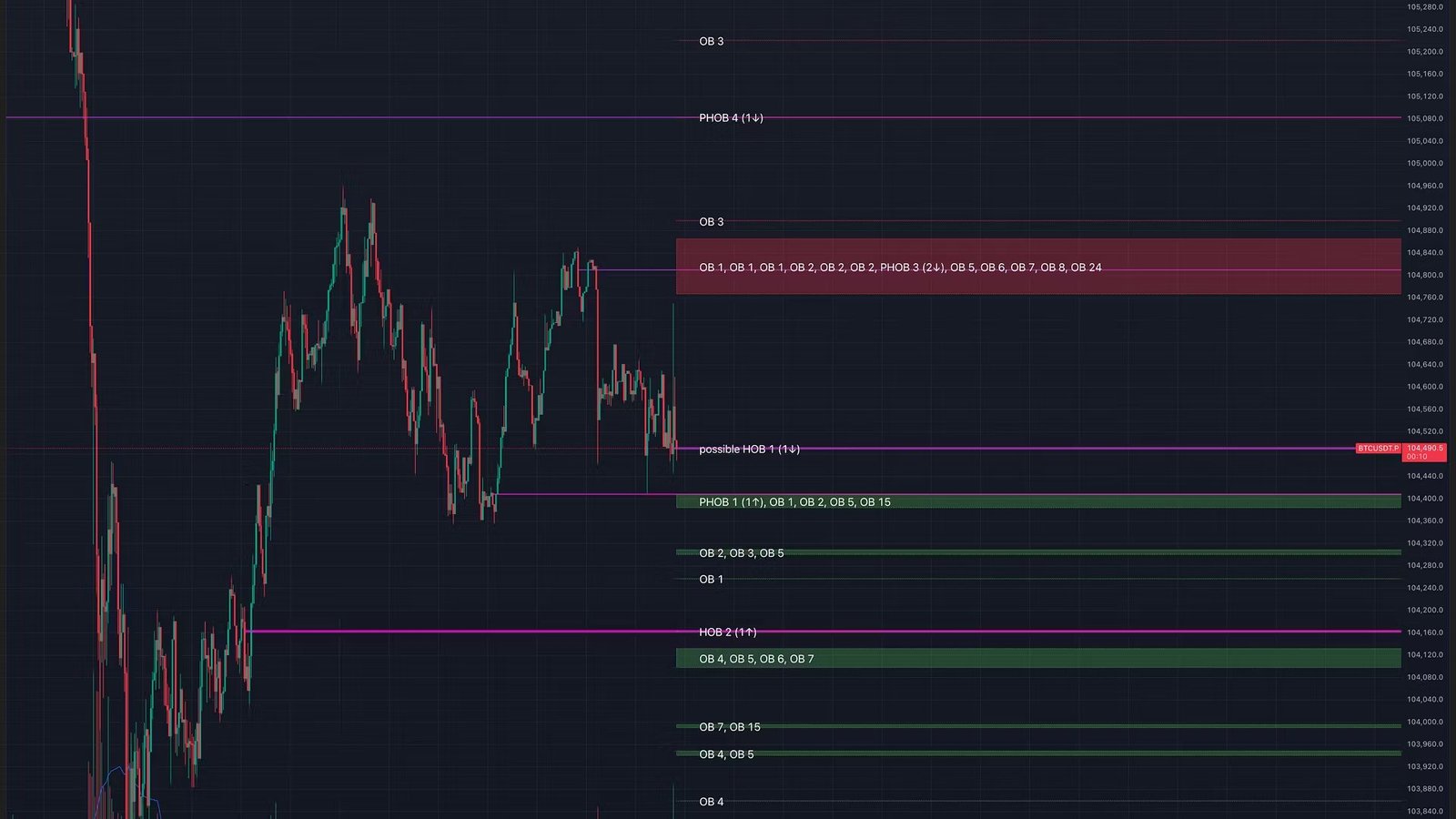
Institutional Order Finder PRO is a TradingView indicator from LumoSpectra. It is built for traders who use Smart Money Concepts, often shortened to SMC, and want help identifying hidden order blocks, breaker blocks, order blocks, cluster zones, and other chart structures that may point to institutional-style activity.
The product is not a beginner trading course and should not be treated like a one-click decision system. It is better understood as a technical confluence tool. That means it can help a trader organize the chart, highlight zones, and compare structure, but the trader still needs a strategy, risk rules, market understanding, and a process for deciding which signals matter.
That distinction is important for this Institutional Order Finder review. Many people search for the best SMC indicator, the best TradingView order block indicator, or the best hidden liquidity indicator because they want the chart to become easier to read. IOF Pro is designed for that kind of trader, but it works best when the person already understands the language of liquidity, structure, and confirmation.
LumoSpectra’s broader positioning is centered around smart money tools, hidden liquidity, and institutional order-flow style analysis. Ingo, the creator identity connected with the product, presents the tool as a combination of trading knowledge, data analysis, and programming. That matters because IOF Pro is not just a visual theme for TradingView. It is an attempt to automate a more specific SMC workflow.
A. The main problem IOF Pro tries to solve
SMC trading can become visually messy. A trader may mark swing highs and lows, possible order blocks, fair value gaps, breaker blocks, liquidity pools, value zones, and multi-timeframe levels. After a while, the chart can become so crowded that it is difficult to tell what actually matters.
Institutional Order Finder is useful because it tries to turn that process into a more organized visual system. Instead of manually building every zone from scratch, the trader can use the indicator to surface potential areas of interest, then decide whether those areas align with the broader plan.
B. Why the tool is better for prepared traders
IOF Pro uses terminology that assumes a trader already has some SMC foundation. Hidden order blocks, breaker blocks, fair value gaps, engulfing logic, multi-timeframe analysis, and liquidity zones are not basic chart terms. A complete beginner can learn them, but the indicator will make more sense after the trader understands why those structures matter.
That is not a weakness. It simply defines the fit. Institutional Order Finder is more compelling for traders who already know the method and want better chart workflow than for someone who has never studied price action before.
II. Hidden Order Blocks, Breaker Blocks, and SMC Context
The core of IOF Pro is its focus on hidden order blocks, breaker blocks, order blocks, and liquidity-style market structure. These concepts are central to many SMC approaches, so it helps to define them in plain English.
An order block is usually thought of as a price zone where larger market participants may have built or defended a position before a meaningful move. Traders use those zones as potential reaction areas. A hidden order block is a less obvious structure that may not stand out on a simple chart, but can still matter when price returns to it.
A breaker block is related to failed or transformed structure. When a prior support or demand area breaks and later acts differently, traders may treat it as a new reference zone. These areas can be useful because they show where the market previously changed character.
A. Why hidden liquidity matters
Liquidity is where orders may be resting. In practical trading language, liquidity often builds around obvious highs, lows, stops, and levels that many traders are watching. SMC traders care about liquidity because price can move toward those areas before reversing, continuing, or creating a cleaner setup.
Institutional Order Finder is built around the idea that a chart can reveal useful institutional-style footprints when the trader knows what to look for. The indicator helps identify possible zones, but it still needs context. A zone on its own is not a trade plan. The trader has to decide whether the zone aligns with trend, higher-timeframe structure, session behavior, news, and risk.
B. Why labels need interpretation
Indicator labels can be helpful, but they can also create false confidence if a trader treats them as instructions. A label such as OB, HOB, PHOB, or BB should trigger analysis, not automatic action. The useful question is: does this zone support the broader idea I already have, or is it just another mark on the chart?
That is where IOF Pro fits well. It can help organize potential levels, but the trader still has to filter. A strong use case is to combine IOF Pro zones with your own market structure read, then wait for price behavior to confirm whether the area is actually useful.
III. Clustering, Multi-Timeframe Analysis, and Filters
One of the stronger reasons to consider Institutional Order Finder is the clustering and multi-timeframe side. In SMC trading, not all zones carry the same weight. A level that appears across several timeframes, or lines up with a larger structural area, can be more interesting than an isolated lower-timeframe mark.
Clustering helps because it groups related institutional footprints into a more readable area. Instead of staring at many separate lines, a trader can identify broader zones where multiple signals overlap. That can make the chart easier to interpret, especially for traders who already know how to rank confluence.
A. Multi-timeframe context
Multi-timeframe analysis is essential for many SMC traders. A five-minute setup may look attractive, but the higher-timeframe structure can completely change the quality of that idea. IOF Pro’s multi-timeframe approach helps traders see where smaller zones line up with larger context.
That is useful for day traders and swing traders in different ways. A day trader may use higher-timeframe zones to avoid shorting into a major support area or buying into a heavy resistance area. A swing trader may use lower-timeframe structure to refine timing around a larger zone.
B. Filters and settings
IOF Pro includes advanced filtering concepts such as Dynamic Volume, RSI, ADX, engulfing methods, external data, labels, graphics, calculation settings, and alert options. Those settings can help traders customize the tool, but they also require patience. More settings do not automatically mean better decisions.
The best approach is to start simple. Use the default visual structure, learn what each label means, and only add filters when you know what problem they solve. If a trader changes too many settings at once, it becomes difficult to know whether the indicator is helping or simply creating noise.
For broader platform context, PTI’s TradingView review can help readers understand why many indicators and charting tools are built around TradingView in the first place.
IV. How IOF Pro Fits a TradingView Workflow
Institutional Order Finder is most useful when it becomes part of a repeatable TradingView workflow. A trader should not open the chart, see a zone, and immediately act. The better routine is to start with market structure, then use the indicator to refine the areas worth watching.
A. A practical workflow
Start with the higher timeframe. Identify the major trend, the obvious highs and lows, and the broader areas where price has reacted. Then turn to IOF Pro and compare its zones with your manual read. If the tool highlights a cluster in the same area you already cared about, that is useful confluence.
Next, drop to the execution timeframe. Watch how price approaches the zone. Is price moving cleanly? Is it extended? Is there a fair value gap nearby? Are there overlapping order blocks or breaker blocks? Is the move happening during a meaningful session? Those questions help the trader move from indicator output to actual analysis.
B. Alerts and risk rules
Alert options can be useful for traders who do not want to stare at the screen all day. The danger is that alerts can become interruptions if they are not tied to a plan. A better use is to set alerts around zones that already matter, then evaluate the market when the alert fires.
Risk rules still come first. IOF Pro can help identify structure, but it cannot decide how much risk a trader should take, whether the setup is worth the trade, or when someone should stop for the day. For that side of the process, PTI’s guide to trading risk management strategies is a useful companion.
V. What Public Reviews Highlight
Institutional Order Finder has a narrow public review footprint, so the better approach is to use available feedback carefully rather than overstate it. The visible feedback points toward usefulness for traders who already understand Moneytaur-style concepts and want a cleaner indicator workflow.
| Public feedback theme | What it suggests for traders |
|---|---|
| SMC familiarity | The tool appears most relevant for traders who already understand SMC terminology and want an indicator that supports that style. |
| Indicator quality | The positive feedback centers on the indicator itself rather than a broad education community, which fits the product’s role as a TradingView tool. |
| Concept alignment | The strongest fit is likely traders who already study hidden liquidity, order blocks, breaker blocks, and related smart-money methods. |
That feedback pattern supports the main conversion case: IOF Pro is best evaluated as a specialized SMC tool, not as a broad beginner community. The narrower the trader’s need, the more compelling the product becomes. If you are actively studying hidden order blocks and breaker structures, Institutional Order Finder is much more relevant than a generic indicator bundle.
VI. How Different Traders Can Use Institutional Order Finder
Institutional Order Finder can fit several trader types, but it should be used differently depending on experience level.
A. Beginners studying SMC vocabulary
Beginners should be careful with IOF Pro. The tool can expose them to useful concepts, but it may also overwhelm them if they do not understand the basics yet. A beginner should first learn what order blocks, fair value gaps, liquidity, market structure, and breaker blocks mean.
If a beginner still wants to use the tool, the best approach is observational. Open a chart, watch what the indicator marks, and then study why those areas may matter. Do not treat every label as an instruction. Treat it as a prompt to learn the concept.
B. Intermediate SMC traders
Intermediate traders are likely the strongest fit. They already know the language, but they may spend too much time manually marking zones. IOF Pro can help them speed up the chart prep and compare their own read against automated structure.
The best intermediate workflow is to mark your own zones first, then compare IOF Pro. If the tool agrees with your read, that may increase confidence in the area. If it finds something you missed, study it before acting. The goal is not to outsource judgment. The goal is to improve chart awareness.
C. Advanced traders
Advanced traders can use IOF Pro as a confluence layer. They may already have their own model for market structure, but the indicator can still help them scan, compare timeframes, manage visual zones, and set alerts around areas that matter.
The advanced use case is selective. Use the tool to save time, not to replace the playbook. Keep the chart clean enough that the most important zones stand out.
VII. First-Week Plan for New Members
The first week with Institutional Order Finder should be slow and structured. Start by adding the indicator to a clean TradingView chart and leaving advanced settings alone. The goal is to understand the base output before customizing anything.
Next, choose one market and one or two timeframes. A common mistake with powerful indicators is trying to test everything at once. Pick one chart, identify the main structure manually, then compare it with IOF Pro’s order blocks, breaker blocks, hidden order blocks, and clusters.
After that, study the manual topics in small pieces. General settings, performance settings, clustering, labels, MTF settings, fair value gaps, alerts, and calculation settings each deserve separate attention. If you change too much in one session, you will not know what improved the chart.
Finally, create a simple review routine. Save screenshots of zones before price reacts, then review what happened later. Did the zone matter? Did price ignore it? Was the higher timeframe aligned? Did the cluster make the area clearer? This turns IOF Pro into a learning tool instead of a decoration on the chart.
VIII. Institutional Order Finder FAQ
A. What is Institutional Order Finder?
Institutional Order Finder PRO, or IOF Pro, is a LumoSpectra TradingView indicator built around Smart Money Concepts, hidden order blocks, breaker blocks, order blocks, clusters, fair value gaps, and multi-timeframe analysis.
B. Who is IOF Pro best for?
IOF Pro is best for traders who already understand SMC, market structure, liquidity, order blocks, and TradingView workflows. It is more of a confluence tool than a beginner education product.
C. Does IOF Pro work as a standalone trading system?
No. IOF Pro should be used as a technical confluence indicator. Traders still need a strategy, risk rules, market context, and a clear process for deciding which zones are worth attention.
D. What are hidden order blocks?
Hidden order blocks are less obvious price zones that may represent meaningful institutional-style activity. IOF Pro helps surface those areas so traders can compare them with broader market structure.
E. What are breaker blocks?
Breaker blocks are structure zones where a prior area changes role after price breaks through it. SMC traders often use them to study continuation or reversal context.
F. Is Institutional Order Finder useful for beginners?
It can be useful as a learning aid, but beginners should study SMC vocabulary first. The tool makes much more sense after a trader understands liquidity, order blocks, market structure, and risk management.
IX. Final Take
Institutional Order Finder is worth considering if you already trade with Smart Money Concepts and want a more structured TradingView workflow. IOF Pro is built around hidden order blocks, breaker blocks, order blocks, clusters, fair value gaps, multi-timeframe context, filters, and alert options. That makes it much more specific than a basic indicator.
The strongest reason to join is workflow clarity. If you already understand the concepts, IOF Pro can help you identify and organize potential areas of interest faster. If you are brand new to SMC, start by learning the vocabulary and use the indicator slowly so the chart does not become overwhelming.
If you are searching for Institutional Order Finder review, IOF Pro review, LumoSpectra review, TradingView hidden order blocks indicator, breaker blocks indicator, SMC TradingView indicator, or institutional order flow indicator, Institutional Order Finder is the specific product to evaluate through the official access route.
