

This content is for informational and entertainment purposes only, not financial advice. Trading involves risk and is not suitable for all investors. This article may contain affiliate links, which means Pro Trading Insights may earn a commission if you sign up through a link. For full details, see our Affiliate Disclosure and Full Disclaimer.
Quick Verdict: MarketPulse is best suited for stock traders and swing traders who want live market context from Ariel Hernandez, Nick Drendel, and other active traders instead of a quiet list of ticker alerts. The strongest reason to consider it is the combination of curated watchlists, real-time trade ideas, live Q&A, strategy discussion, and daily market breakdowns that help members understand why a setup matters.
Best fit: traders who want to improve market awareness, patience, and trade selection. If you only want a trade copied into your account, you may miss the best part of the room. MarketPulse is more compelling when used as a learning environment where members study themes, watchlists, risk, and the reasoning behind trades.
Best Fit Snapshot
| Swing traders | Useful if you want help reading themes, relative strength, watchlists, and trade ideas beyond one-minute reaction trading. |
| Live-room learners | Useful if you learn best by hearing experienced traders explain what they are watching in real time. |
| Market-awareness builders | Useful if your main goal is to understand context, themes, patience, and decision quality. |
| Strongest reason to join | MarketPulse gives members live market breakdowns, watchlist context, trade ideas, Q&A, and education from Ariel, Nick, and the room. |
Table of Contents
I. MarketPulse At a Glance
MarketPulse is a trading community built around Ariel Hernandez, Nick Drendel, and a broader group of active market participants. The core experience is live market breakdowns, curated watchlists, real-time trade ideas, live Q&A, and strategy discussion. That combination makes it more than a standard Discord where members wait for someone to post a ticker.
The MarketPulse angle is especially relevant for swing traders. Swing trading usually means holding ideas longer than a quick scalp, often based on themes, chart structure, relative strength, market leadership, and risk management. That style requires context. A trader needs to know what is leading, what is breaking down, which sectors matter, how strong the market is, and whether the setup has enough room to work.
For newer traders, the most useful part of MarketPulse may be hearing how experienced traders frame the market. A watchlist is not just a list of symbols. It is a map of names worth monitoring. A trade idea is not a guarantee. It is a structured possibility with a reason, a risk point, and a way to judge whether the idea is still valid. Live Q&A matters because it lets members clarify that reasoning instead of guessing from a screenshot.
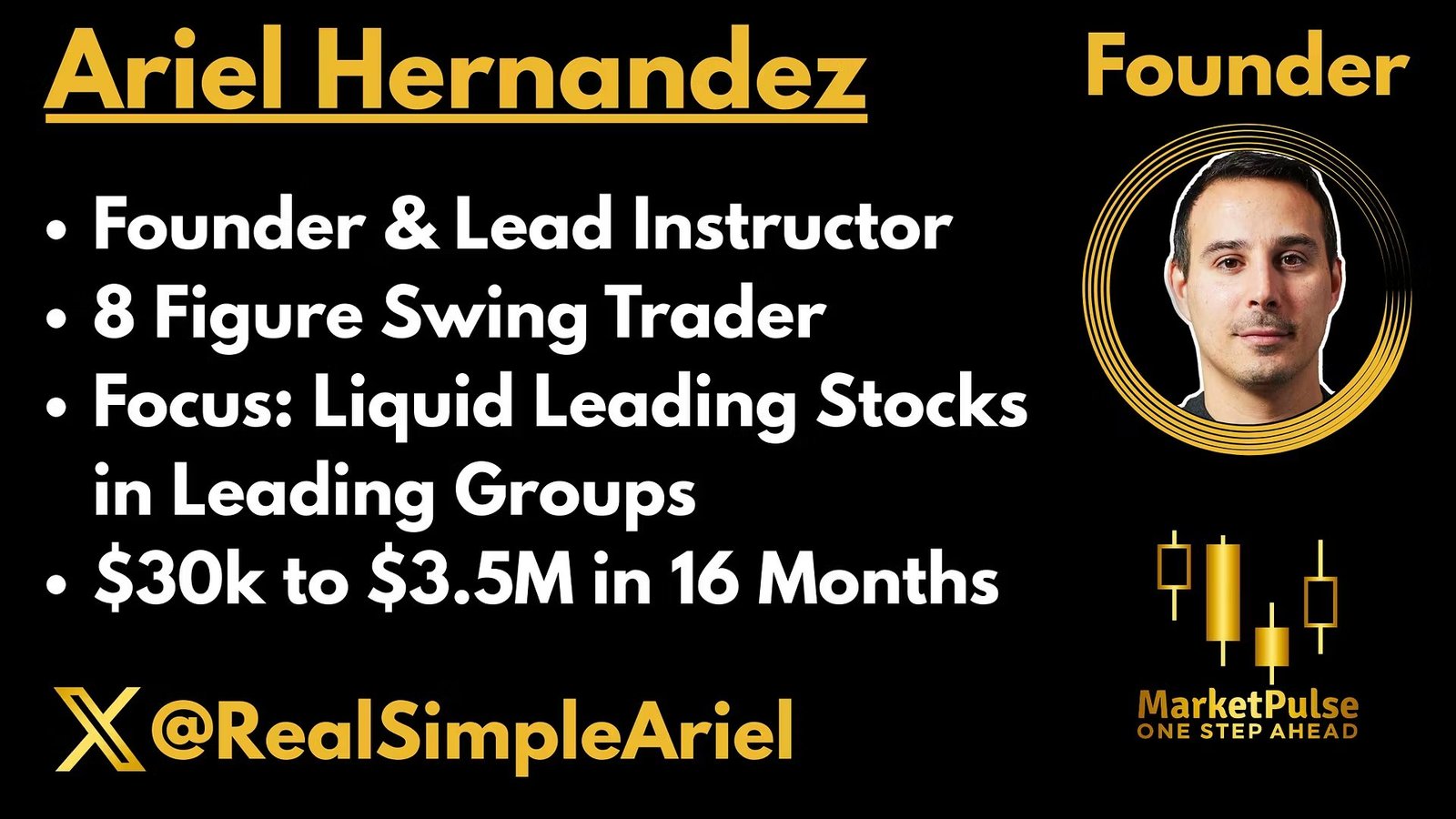
A. Ariel Hernandez and Nick Drendel
MarketPulse is closely associated with Ariel Hernandez and Nick Drendel. Public member feedback repeatedly mentions both of them, especially around live streams, trade reasoning, market awareness, and clear explanation. That matters because trading rooms are easier to trust when members can identify who is leading the discussion and what type of value they bring.
Ariel’s appeal appears to be live market presence, patience, mental toughness, and swing-trading perspective. Nick is repeatedly mentioned for explanation and market knowledge. Together, that gives the room a more complete feel than a one-person alert stream. Members can hear market context, trade reasoning, and discussion from more than one angle.
B. Why the room is not only about alerts
Alerts can be useful, but MarketPulse is strongest when the member studies the reasoning behind the idea. A ticker alone does not teach you much. The useful part is understanding why the setup is being watched, what market theme supports it, where the risk sits, and when the idea should be ignored.
That distinction is important for beginners, intermediate traders, and advanced traders. Beginners need the language. Intermediate traders need better filtering. Advanced traders may already have a system but want a high-quality room for additional context and idea flow.
II. Live Market Breakdowns, Watchlists, and Trade Ideas
The main MarketPulse features work together: live streams, market breakdowns, curated watchlists, trade ideas, live Q&A, and strategy deep dives. A trader can use those pieces to build a daily routine. Watch the market breakdown, mark the themes, study the watchlist, listen for the logic behind trade ideas, and ask questions when something is unclear.
The value is not that every idea will work. No trading room can promise that. The value is that members can see how experienced traders think through the market. That can help newer traders avoid random entries and help more experienced traders compare their own read with another disciplined process.
A. Watchlists as preparation
A curated watchlist is useful because it narrows attention. The market has thousands of symbols. Without a watchlist, a trader can bounce from chart to chart and always feel late. A good watchlist helps the member focus on names with relevant structure, themes, or momentum.
MarketPulse can be especially useful when members use watchlists before the move, not after. The routine is to know what is being watched, understand why, and wait for a setup that fits. That is very different from jumping into a chart only because someone else is excited.
B. Live streams and Q&A
Live streams help because they show the market in motion. The trader can hear what matters, what does not, and why a setup may need patience. Public reviews repeatedly mention live streaming and daily interaction as a major part of the experience. That is important because live explanation can fill the gap between a written alert and a real decision.
Live Q&A is also valuable when members ask specific questions. The best questions are not “what should I buy?” They are questions about levels, risk, theme strength, entry timing, invalidation, and whether a setup still fits the original idea. Those questions help members learn how to think rather than only what to trade.
If you are comparing MarketPulse with other live trading rooms, PTI’s guide to the top day trading Discords can help frame the difference between live commentary, alerts, education, and community support.
III. How to Use MarketPulse Without Chasing
The best way to use MarketPulse is to build a simple routine before the market starts. Review the watchlist, write down the themes, note the key levels, and decide how much risk you are willing to take before any trade idea appears. That preparation turns the room into a decision-support environment rather than an emotional feed.
This is especially important for swing trading. Swing trades often require patience. You may need to wait for confirmation, a pullback, a breakout, or a clean risk point. If you chase late because a live room is active, you can turn a good idea into a bad trade. MarketPulse is most valuable when it helps you slow down and select better.
A. First-week member routine
A practical first week inside MarketPulse should focus on observation. Watch how Ariel and Nick discuss the market. Track which names appear repeatedly. Notice how ideas are handled when the market changes. Write down when the room avoids a trade, not just when it takes one. Avoid judging the entire membership by a single trade idea.
That first week can also help you decide whether the room’s style fits your own schedule. If you cannot watch live, the value may come more from watchlists, recaps, or education. If you can watch live, the value may come from hearing how trade reasoning develops throughout the day.
The best first-week metric is not profit or loss. It is clarity. By the end of a few sessions, a member should understand which market themes the room cares about, how watchlist names are chosen, how risk is discussed, and how the team handles changing conditions. That is a better evaluation than asking whether the first idea you saw happened to work. A room with a clear process can still have losing trades. A room with no process can still have lucky winners. MarketPulse should be judged by whether the process improves how you prepare.
B. Turn ideas into a personal checklist
Every member should have a personal checklist. The checklist can include the ticker, theme, chart pattern, level, stop area, target area, position size, and reason the trade no longer makes sense. This turns a MarketPulse idea into a personal plan. Without that step, the member is only reacting.
The checklist also makes review easier. After the trade, you can ask whether the idea was sound, whether you followed your rules, and whether the result came from process or randomness. That is where a community can improve long-term skill. It gives you more examples to study, but the review still has to be yours.
A useful MarketPulse note can be short: ticker, reason, market theme, level, invalidation, and lesson. That is enough to make the live room actionable without turning it into noise. If a trade idea cannot be summarized that way, the member may not understand it well enough to act on it. That pause is a benefit, especially for traders who tend to overtrade when the room is active.
For broader community comparison, PTI’s guide to the best trading Discord servers can help you compare MarketPulse with alert rooms, course communities, and multi-analyst trading servers.
IV. What Public Reviews Highlight
Public feedback for MarketPulse is one of the stronger trust signals in this batch because members repeatedly describe specific value: Ariel and Nick explaining trade reasoning, daily live streams, market awareness, patience, mental toughness, questions being answered, and a room that helps traders think through setups. That kind of feedback is stronger than generic praise because it tells readers what the room actually feels useful for.
| Public review theme | What it suggests for traders |
|---|---|
| Live explanations from Ariel and Nick | Members value hearing the reasoning behind trades rather than only seeing an alert. |
| Market awareness and themes | The room can help traders understand what is moving, what matters, and where attention should go. |
| Patience and mental discipline | Feedback suggests the room may help members avoid impulsive trading and stay focused on process. |
| Community questions and discussion | Members appear to value active answers, live interaction, and a room that supports learning. |
The reviews should still be read correctly. They support the quality of the member experience, not a guarantee that any specific trade will work. A good room can improve your process, but the trader remains responsible for risk, sizing, and execution.
V. Who MarketPulse Fits Best
MarketPulse fits traders who want live market context, watchlists, and education around trade ideas. It is strongest for people who want to improve how they read the market, not just people looking for a quick ticker to copy.
A. Swing traders who want context
Swing traders can benefit from the room because it focuses on market themes, watchlists, and trade reasoning. If you are trying to hold ideas beyond a quick scalp, context matters. You need to know whether the setup fits the broader market and whether the risk is defined.
B. Beginners who want to hear reasoning
Beginners can benefit if they use the live discussion to learn terminology and decision-making. The key is to start with observation. Write down why a trade is being watched. Learn how the team handles patience. Do not treat every idea as urgent.
C. Experienced traders who want another lens
Experienced traders may use MarketPulse as a second lens. They may already have a process, but a high-quality room can help with idea flow, themes, and market awareness. The best use is comparison, not dependency.
For advanced members, the value may come from sharpening selectivity. A seasoned trader does not need every idea. They need the right handful of ideas and a room that helps them stay objective. If MarketPulse helps a trader notice leadership, avoid weak setups, or stay patient while the market is unclear, the membership can be useful even without taking every trade that gets discussed.
Final Take
MarketPulse is a strong fit for traders who want live market breakdowns, curated watchlists, trade ideas, Q&A, and strategy discussion from Ariel Hernandez, Nick Drendel, and the surrounding community. The public feedback is specific and repeatedly points to live explanation, patience, and market awareness.
The best way to approach MarketPulse is to use it as a decision-support and learning environment. Study the watchlists, listen to the reasoning, ask better questions, and turn each idea into your own plan before risking capital. If you want a trading room that helps you read the market instead of only reacting to alerts, MarketPulse is worth a closer look.
FAQ
A. What is MarketPulse?
MarketPulse is a trading community built around live market breakdowns, curated watchlists, real-time trade ideas, live Q&A, and strategy discussion from Ariel Hernandez, Nick Drendel, and other traders.
B. Is MarketPulse good for swing traders?
MarketPulse can be a strong fit for swing traders because it emphasizes market themes, watchlists, trade reasoning, patience, and live context.
C. Does MarketPulse provide trade ideas?
Yes. MarketPulse includes real-time trade ideas and watchlist context, but members should still build their own plan, manage risk, and avoid blindly copying any idea.
D. Is MarketPulse beginner-friendly?
MarketPulse can help beginners if they start by observing live streams, learning the language of the room, asking specific questions, and focusing on risk before trading actively.
E. Does MarketPulse guarantee trading results?
No. MarketPulse can provide market context, education, ideas, and community discussion, but results depend on each trader’s timing, risk management, execution, discipline, and market conditions.
