

This content is for informational and entertainment purposes only, not financial advice. Trading involves risk and is not suitable for all investors. This article may contain affiliate links, which means Pro Trading Insights may earn a commission if you sign up through a link. For full details, see our Affiliate Disclosure and Full Disclaimer.
Quick Verdict: TickerTrendz is a futures-focused algo and indicator ecosystem for traders who want TradingView tools, NQ/ES market context, auction-market education, and a Whop route connected to Seven Campbell. It is best viewed as a tool-supported trading stack, not as an automated replacement for risk management or trader judgment.
Best fit: futures traders who want indicator support, auction market structure, TradingView integration, and community context around NQ and ES instead of a generic signal room.
Best Fit Snapshot
| Core benefit | TradingView indicator access, futures-market tools, auction-market education, Discord context, and a TickerTrendz Whop route. |
| Strongest reason to join | TickerTrendz gives futures traders a more visual, tool-supported way to study market structure and execution areas. |
| Good match if | You trade or study NQ/ES futures and want indicators, auction-market context, and a structured tool stack around TradingView. |
| Best way to use it | Use the tools to organize levels and probabilities, then apply your own risk rules before acting on any setup. |
Table of Contents
I. What Is TickerTrendz?
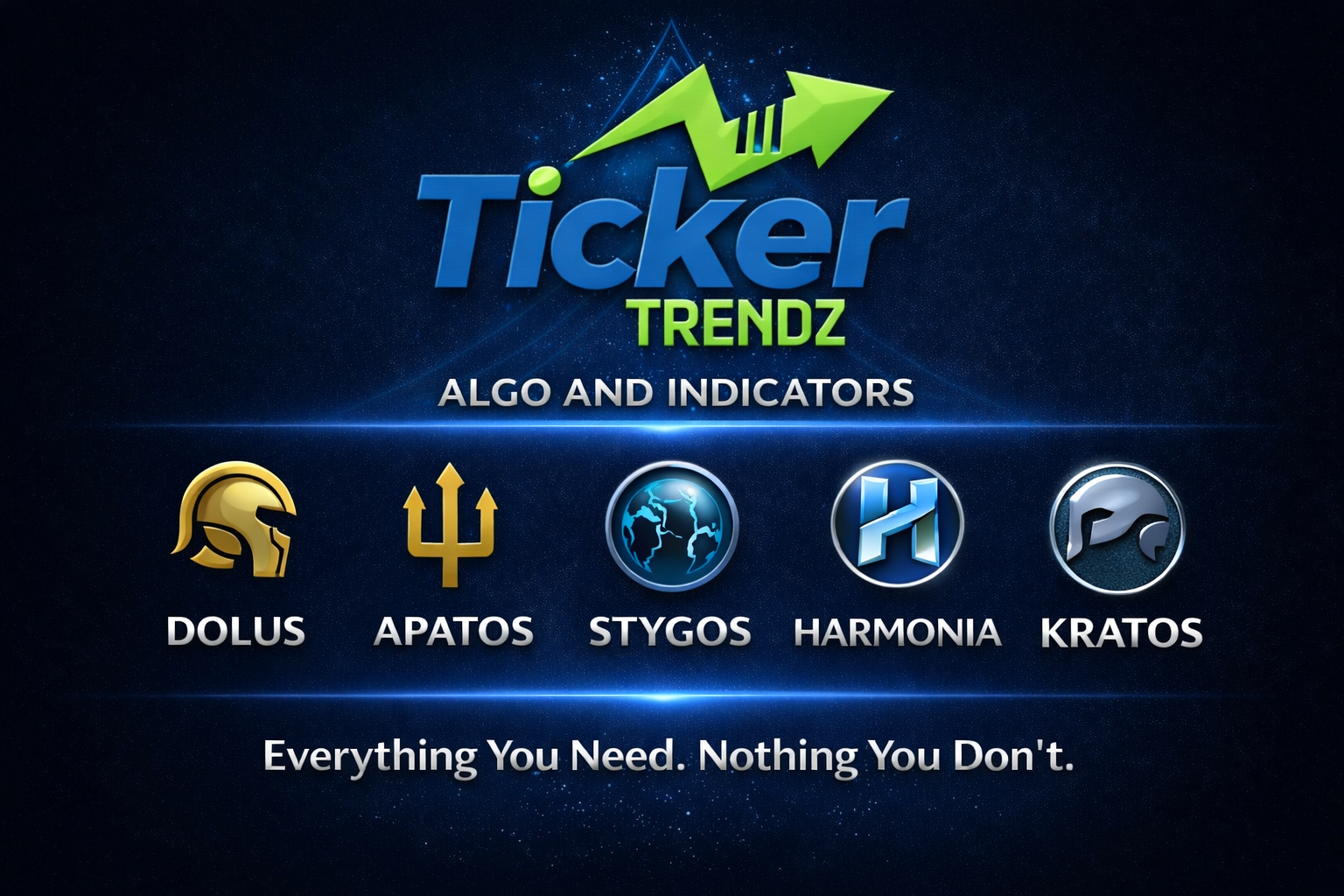
TickerTrendz is a Whop-accessible futures trading tool ecosystem built around algorithmic indicators, TradingView access, auction market concepts, and community context. The brand is connected to Seven Campbell and has a clear NQ and ES futures angle. For someone searching for a TickerTrendz Futures Algo review, the cleanest way to understand it is this: TickerTrendz is a trading tool stack first, not a normal alert room.
That matters because tools and communities should be evaluated differently. A signal room is mainly judged by trade ideas and communication. An indicator ecosystem is judged by whether it helps the trader read structure, identify levels, understand risk areas, and execute more consistently. TickerTrendz sits closer to the second category.
A. Why the futures focus matters
Futures trading is different from scanning random stocks. NQ and ES are highly liquid index futures contracts tied to Nasdaq and S&P 500 market movement. They can move quickly, respond to macro events, and punish poor risk control. A futures trader needs to understand levels, volatility, session structure, order flow context, and position sizing before relying on any tool.
TickerTrendz is relevant because it is built around that type of market. A general stock Discord may not speak the same language as a futures trader. TickerTrendz focuses more on indicators, auction market structure, and execution tools, which makes it more useful for people who already care about futures-specific context.
B. What an algo or indicator should actually do
An algo or indicator should help organize information. It can highlight levels, visualize structure, identify possible reaction areas, or make a trading framework easier to apply. It should not be treated as a magic decision engine. Futures markets still require risk control, patience, and the ability to stand aside when conditions are poor.
The best way to use TickerTrendz is to let the tools support your decision process. If a level appears on the chart, the trader still needs to ask whether the broader context agrees, whether the setup has clean invalidation, and whether the risk makes sense. The tool can make the chart clearer, but it cannot remove the trader’s responsibility.
C. The role of Seven Campbell and public channels
TickerTrendz has a creator-led identity through Seven Campbell, with public channels on X and YouTube. That helps traders confirm the exact brand and evaluate the creator’s style before joining. For futures tools, that matters because traders need to understand the logic behind the tool, not only see screenshots.
Creator presence is not proof of trading results, and it should not be treated that way. It is useful context. A trader can review the public tone, see whether the futures focus matches their own market interest, and decide whether the tool ecosystem deserves a closer look.
II. Futures Algo Tools, TradingView, and Harmonia
TickerTrendz is most interesting because it combines multiple tool and education routes under one brand. The ecosystem includes Discord access, a Harmonia auction market tool, a Harmonia market eBook, and TickerTrendz trading stacks tied to TradingView. That combination gives the brand more depth than a single chart indicator.
A. TradingView indicator access
TradingView is one of the most common charting platforms for active traders, so a TradingView-based indicator stack can be convenient. It lets a trader use familiar charts while adding TickerTrendz-specific overlays, levels, or tool logic. That reduces friction compared with learning a separate charting platform.
The benefit is visual structure. Futures charts can become noisy, especially around opening ranges, news reactions, and high-volume reversal areas. A tool stack can help mark the areas that matter so the trader is not drawing everything manually. The risk is overconfidence. A cleaner chart does not automatically mean a better trade.
That is why the best use case is preparation plus confirmation. A futures trader can map the major areas before the session, watch how price behaves around those areas, and then use the indicator context as one part of the decision. If NQ is moving quickly after a data release, the tool may help show structure, but the trader still needs to slow down, size correctly, and decide whether the conditions are clean enough to participate.
This is also where a TradingView-based setup can be easier to adopt. Many traders already have alerts, layouts, volume tools, and session markers inside TradingView. Adding TickerTrendz into that environment can keep the workflow familiar while giving the chart more futures-specific context.
B. Harmonia and auction market context
Harmonia is one of the more important parts of the TickerTrendz ecosystem because it is tied to auction market structure. In simple terms, auction market ideas look at where price is accepted, where it is rejected, and where the market may be searching for balance. That can be useful for futures traders because NQ and ES often rotate around key value areas before expanding.
Auction market context can help traders avoid treating every candle as a breakout. Sometimes the better read is that the market is balancing. Other times, the market is accepting above or below a level and may be ready to continue. A tool like Harmonia can be valuable if it helps the trader see that structure more clearly and apply it with risk discipline.
C. Discord and education around the tools
A tool stack becomes more valuable when traders understand how to use it. Discord and educational resources can help explain what the tools are marking, why a level matters, and how different market conditions affect the read. That is especially useful for futures traders who are newer to auction market logic.
The strongest version of TickerTrendz is not “turn on an indicator and follow it blindly.” The stronger version is tool plus education. The trader learns what the tool is showing, watches how the market reacts, and builds a process around entries, stops, and trade review.
If you are comparing futures-focused communities, PTI’s guide to futures trading Discord groups is a useful next read. For broader community comparisons across markets, see the guide to best trading Discord servers.
III. Public Reviews and Trust Signals
TickerTrendz currently has a smaller but positive public review footprint on Whop. That makes it different from large trading communities with hundreds of reviews, but it does not make the product irrelevant. For a niche futures algo tool, the more important question is whether the visible feedback aligns with the product’s actual use case.
The strongest trust signals are specificity and source consistency. TickerTrendz is not vague about its direction. It points toward futures, NQ/ES, TradingView tools, Harmonia, and algorithmic indicators. That specificity helps traders decide quickly whether the product matches their market and style.
| Public review theme | What it suggests for traders |
|---|---|
| Futures-specific focus | TickerTrendz is most relevant for traders who care about NQ, ES, and futures-market structure. |
| TradingView indicators | The tools can help traders visualize structure inside a familiar charting platform. |
| Auction market education | Harmonia-style resources can help traders think about balance, acceptance, and rejection. |
| Creator-led ecosystem | Seven Campbell’s public presence gives traders more context around the brand and its futures angle. |
The main caution is that indicators can create false confidence if they are used without a plan. Positive reviews should be weighed alongside personal fit. A trader still needs to understand contract risk, tick value, volatility, and when to stop trading. TickerTrendz can support the process, but it cannot replace it.
IV. Who TickerTrendz Fits Best
TickerTrendz fits traders who want futures-specific tooling and education. It is not the cleanest match for someone who wants stock swing alerts, crypto calls, or a broad beginner investing course. The value is the NQ/ES and tool-supported trading angle.
A. Beginner traders
Beginners should approach TickerTrendz carefully. Futures can be intense, and indicators can make trading look easier than it is. A new trader should first learn what NQ and ES are, how tick values work, how leverage affects risk, and why stop placement matters. The tools can help with structure, but they should not be the first thing a trader depends on.
A good beginner use case is observation. Watch how the indicators mark levels, compare those levels with actual market behavior, and journal what happened without rushing to trade every signal. That teaches market rhythm before real pressure is added.
B. Intermediate traders
Intermediate futures traders may get the most practical value. They already understand basic futures risk and can use a TradingView stack to improve preparation, level marking, and execution planning. Harmonia and auction-market ideas may also help them understand when the market is balancing versus expanding.
The key for intermediate traders is to avoid indicator overload. If a tool stack adds five new signals but no clear decision process, it can create confusion. TickerTrendz is more useful when the trader picks a few core signals, tests them, and builds rules around them.
C. Advanced traders
Advanced traders will likely judge TickerTrendz by whether the tools add clarity without slowing them down. They may already understand auction market concepts, value areas, balance, and execution zones. For them, the question is whether the indicators make those reads faster or more consistent.
For advanced users, TickerTrendz can be a second lens. It may help confirm levels, surface a different read on structure, or streamline chart prep. It should still be used inside a mature risk framework.
V. TickerTrendz FAQ
A. What is TickerTrendz?
TickerTrendz is a Whop-accessible futures trading tool ecosystem built around algorithmic indicators, TradingView tools, Harmonia auction market resources, Discord context, and NQ/ES futures market structure.
B. Is TickerTrendz mainly for futures traders?
Yes. The strongest fit is futures traders or futures students, especially those interested in NQ and ES, TradingView indicators, auction market structure, and tool-supported analysis.
C. Does TickerTrendz replace trader judgment?
No. TickerTrendz should be treated as decision-support tooling. A trader still needs to manage risk, understand futures leverage, review market conditions, and decide whether a setup fits their plan.
D. What is Harmonia?
Harmonia is part of the TickerTrendz ecosystem connected to auction market analysis. It is designed to help traders think about balance, acceptance, rejection, and structure in futures markets.
E. Does TickerTrendz use TradingView?
Yes. The TickerTrendz stack includes TradingView-related experiences. That can be useful for traders who already chart on TradingView and want indicator access inside that environment.
F. Who is Seven Campbell?
Seven Campbell is the creator identity connected to TickerTrendz on Whop. The brand context points toward NQ and ES futures specialization, with X and YouTube routes available for additional creator context.
G. What is the best way to start with TickerTrendz?
Start by studying what each tool is designed to show. Watch how the indicators behave around key sessions and levels, then test the process in a journal before increasing activity. The goal is to understand the structure, not blindly follow every marker.
VI. Final Take
TickerTrendz is one of the more tool-specific Whop trading products in this group. It is not just a community page. It is a futures algo and indicator ecosystem built around TradingView, Harmonia, auction market logic, and NQ/ES context. That specificity helps the review answer long-tail intent around TickerTrendz Futures Algo review and TickerTrendz Harmonia review.
The strongest reason to consider it is if you already care about futures trading and want a more structured charting framework. The tools can help organize information, but they should be used as support, not as a substitute for discipline. Futures trading still requires strong risk rules and the ability to skip poor setups.
For futures traders comparing Whop trading tools, TickerTrendz is worth a closer look. Use it to improve structure, visualize important levels, and learn auction market ideas while keeping your own risk process in control.
