

This content is for informational and entertainment purposes only, not financial advice. Trading involves risk and is not suitable for all investors. This article may contain affiliate links, which means Pro Trading Insights may earn a commission if you sign up through a link. For full details, see our Affiliate Disclosure and Full Disclaimer.
Quick Verdict: TPM is a Market Cipher B-focused trading education community built around structure, discipline, swing-trading process, the TPM Candles indicator, and patient instruction for traders who want to understand the indicator instead of guessing from dots and waves.
Best fit: Traders who use Market Cipher B, crypto or swing traders who want more structure, members who want indicator education with community support, and intermediate traders who prefer fewer planned setups over a constant stream of fast alerts.
Best Fit Snapshot
| Core benefit | TPM helps traders study Market Cipher B, swing-trading structure, indicator signals, mindset, and community-based chart review. |
| Strongest reason to join | The strongest reason is the indicator-specific education: members can learn how Market Cipher B, TPM Candles, and chart context work together. |
| Good match if | You want a more patient swing-trading process and want help understanding momentum, divergence, entries, and time-frame context. |
| Best way to use it | Start with the foundations, study how TPM explains Market Cipher B, review the indicator examples, and journal every setup before treating it as live. |
Table of Contents
I. What Is TPM?
TPM is a trading education community centered on Market Cipher B, swing-trading structure, indicator interpretation, and a disciplined member workflow. The room is designed for traders who want to understand how signals form and how price context affects each idea.
Market Cipher B is a popular momentum oscillator used by many crypto and swing traders. It includes tools for reading waves, momentum shifts, overbought or oversold conditions, divergence, and signal dots. Those tools can be helpful, but they are easy to misuse when a trader treats every dot or wave as a trade instruction.
That is where TPM becomes more interesting. The public reviews and product context point toward a room that teaches the indicator rather than simply showing it. Members talk about structure, patience, foundation-building, and instruction from Dr. Slater and the TPM team. That gives the community a clearer identity than a generic indicator chat.
If you are comparing TPM reviews, the main question is whether you want to trade around a Market Cipher B-centered process. If you already use the indicator or want to learn it in a more organized way, TPM is directly relevant. If you prefer pure price action with no oscillator framework, the fit is less obvious.
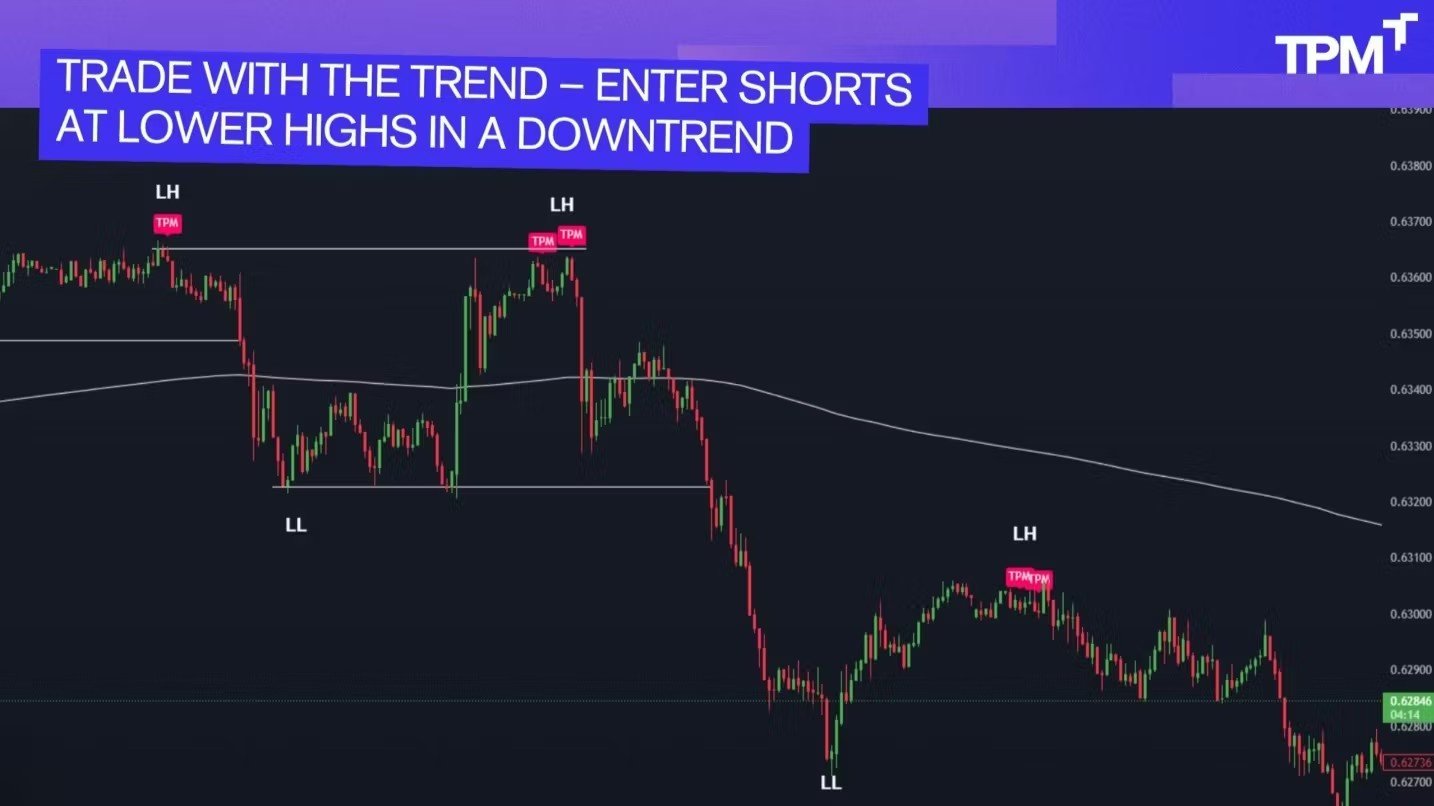
A. Why Market Cipher B needs context
Market Cipher B can show momentum, wave structure, divergence, and signal dots, but an indicator is not a full trading plan by itself. A green dot, red dot, wave cross, or VWAP shift means more when it is interpreted with market structure, time frame, trend, and risk.
TPM’s value is strongest when the room helps members connect those pieces. A signal near a clean level is different from a signal in the middle of noise. A higher-time-frame setup is different from a low-time-frame reaction. A patient trader needs to know the difference.
That context is also what helps members avoid overtrading. When a trader knows what a clean TPM-style setup is supposed to look like, skipping low-quality signals becomes easier and more repeatable.
B. Why swing trading changes the room’s pace
TPM is best reviewed as a more patient swing-trading education room. Swing trading gives setups more time to develop, which can help members avoid the pressure of constant intraday decisions.
That slower pace can be useful for traders who have jobs, school, or limited screen time. It can also help newer traders focus on process instead of reacting to every candle.
II. Market Cipher B, TPM Candles, and Swing-Trading Structure
The TPM workflow is built around understanding signals, not blindly reacting to them. Market Cipher B can help traders read momentum through blue waves, signal dots, and VWAP-style context. TPM Candles add another layer by helping members identify potential entries inside the team’s framework.
A. Market Cipher B education
Market Cipher B is often described as an oscillator because it helps traders interpret momentum conditions. A beginner may notice the dots first, but the deeper work is in understanding wave shape, divergence, trend condition, and time-frame alignment.
TPM can be useful when members want that deeper explanation. Instead of asking whether a dot is bullish or bearish by itself, a member can learn why the signal matters, what confirms it, and what conditions make it weaker.
B. TPM Candles
The TPM Candles indicator is one of the most mentioned pieces of the offer. Public feedback references automated-style entry context, which can make chart reading more organized for members who already understand the system.
An entry indicator should still be treated as a tool, not a replacement for judgment. A member should ask whether the candle signal lines up with market structure, momentum, and risk. The best use is to combine the signal with the education rather than using it in isolation.
C. Time-frame awareness
Time frames matter in any indicator strategy. A signal on a small chart can look exciting, but the higher time frame may tell a different story. TPM’s review themes around patience and instruction are important because they help members slow down and ask what context actually matters.
For swing traders, this can be the difference between chasing noise and waiting for a cleaner idea. A setup that fits the daily or four-hour chart may not need the same reaction speed as a scalp.
III. Education, Community, and Member Workflow
TPM’s educational value comes from the combination of courses, community, and direct instruction. Public reviews point to patient teachers, a supportive group, and strong Market Cipher B knowledge. That is exactly what an indicator-focused community needs.
A. Foundation-building
A member who joins TPM should start with foundation material. Learn what Market Cipher B is showing, how TPM uses the indicator, what the candles mean, and how the room thinks about market structure.
That foundation matters because indicator traders often make the same mistake: they search for a signal before they understand the environment. TPM is more useful when members learn the system first.
B. Community support
Community support helps members test their understanding. A trader can ask why a signal was ignored, why a setup was accepted, or how a higher time frame changed the idea.
That feedback loop can make the room more valuable than simply buying an indicator. The education and discussion help members interpret what they are seeing.
IV. What Public Reviews Highlight
Public TPM reviews are useful because they focus on the exact things that matter for this type of product: Market Cipher B understanding, TPM Candles, teacher patience, foundation-building, and community support.
| Public review theme | What it suggests for traders |
|---|---|
| Deep Market Cipher B instruction | TPM may be a strong fit for traders who want to understand the indicator at a more serious level. |
| TPM Candles signal context | The candle tool can help members organize entries when paired with the full system. |
| Patient instructors | The room may work well for members who need concepts explained more than once before they click. |
| Foundation and structure | TPM is best viewed as an education-first community, not a quick-alert shortcut. |
The review themes are a good match for the product. TPM is not trying to be every type of trading room. It is a more specific community for Market Cipher B, swing trading, and indicator-supported structure.
V. How Different Traders Can Use TPM
A. Beginners
Beginners should treat TPM as an education room first. Learn what Market Cipher B shows, why momentum matters, how divergence works, and why signals need risk rules.
The mistake to avoid is jumping straight to live entries. A beginner should study examples, mark charts, and practice explaining why a setup matters before trading from it.
B. Intermediate indicator traders
Intermediate traders may get the most value because they already know the basic language of indicators. TPM can help this group refine how they use Market Cipher B and TPM Candles inside a more structured plan.
The best habit is to write down the signal, time frame, trend context, invalidation area, and reason for taking or skipping the idea. That keeps the system from becoming a visual guessing game.
This is where TPM can be especially useful. Many traders learn an indicator by memorizing screenshots, then become frustrated when a live chart looks different. A stronger approach is to study enough examples that the trader understands the conditions around the signal. Was the market already extended? Was momentum shifting, or was it only pausing? Did the signal appear near a meaningful level? Those questions make the indicator more practical.
C. Swing traders
Swing traders can use TPM to build a calmer routine. Instead of reacting to every intraday move, they can wait for higher-quality setups and use the education to understand when patience is part of the plan.
For broader structure, PTI’s guide to trading risk management strategies is a useful companion when building personal trade rules.
VI. First-Week Plan for New Members
In the first week, start by finding the foundation course material, Market Cipher B lessons, TPM Candles explanation, community support area, and any pinned setup examples.
Next, choose a few historical chart examples and mark what the indicator showed. Do not focus only on where a trade could have worked. Also mark where the signal was messy, late, or unsupported by structure.
Then review current market examples without rushing. Ask what the higher time frame is doing, whether momentum supports the idea, and what would make the setup invalid.
By the end of the week, create a personal TPM checklist. Include indicator signal, wave context, time frame, structure, risk area, and reason for skipping. That checklist will make the education easier to apply.
Keep that checklist short enough to use. If it becomes a complicated document, it will be ignored during live market movement. A useful TPM checklist should help a member slow down, confirm the setup, and avoid forcing a trade when the indicator and chart context are not aligned.
VII. TPM FAQ
A. What is TPM?
TPM is a Market Cipher B-focused trading education community built around swing-trading structure, TPM Candles, indicator interpretation, and community support.
B. Is TPM mainly for Market Cipher B users?
Yes. TPM is most relevant for traders who use Market Cipher B or want to learn an indicator-supported trading framework around it.
C. What are TPM Candles?
TPM Candles are part of the TPM tool workflow and are used to help members identify entry context inside the community’s broader Market Cipher B framework.
D. Can beginners use TPM?
Beginners can use TPM, but they should start with foundation lessons and chart study before treating any indicator signal as actionable.
E. Does TPM promise trading results?
No. TPM can provide education, indicator context, community support, and structured setup review, but trading outcomes depend on market conditions, risk management, and execution.
VIII. Final Take
TPM is worth considering if you want a trading community built around Market Cipher B, TPM Candles, swing-trading patience, and indicator education.
The strongest reason to review TPM closely is the specificity. It is not a generic alerts room. It is a more focused education community for traders who want to understand how a particular indicator system works.
If you are searching for TPM review, TPM Pro Whop review, TPM Candles indicator, Market Cipher B trading course, or swing trading indicator community, the key question is whether you want a structured indicator-first approach. For that use case, TPM is a relevant community to evaluate.
