

This content is for informational and entertainment purposes only, not financial advice. Trading involves risk and is not suitable for all investors. This article may contain affiliate links, which means Pro Trading Insights may earn a commission if you sign up through a link. For full details, see our Affiliate Disclosure and Full Disclaimer.
Quick Verdict: TSTH, also known as The Stock Trader Hub, is best viewed as a trading community built around options alerts, market updates, Discord discussion, and a buy/sell indicator ecosystem. The strongest angle is the combination of real-time market communication and tools. That can be valuable for traders who want more structure around ideas, watchlists, and technical confirmation instead of trying to scan everything alone.
Best fit: The key is to use TSTH as a decision-support layer, not as a blind signal feed. Alerts and indicators can help a trader notice opportunities, but they do not remove the need for risk management, confirmation, position sizing, and personal rules. TSTH is most compelling for someone who wants stock and options context, market discussion, a community room, and a tool-supported workflow.
Best Fit Snapshot
| Best for | Options and stock traders who want alerts, Discord discussion, market updates, watchlists, and indicator support. |
|---|---|
| Main benefit | It combines community-driven market flow with a buy/sell indicator and multiple alert categories. |
| Good match if | You want help finding and organizing trade ideas while still making your own risk decisions. |
| Learning style | Alert-driven, community-based, tool-supported, and centered around practical market updates. |
| Best outcome | A clearer workflow for monitoring ideas, checking indicator context, and staying disciplined around entries and exits. |
Table of Contents
I. TSTH Overview
TSTH is the trading brand behind The Stock Trader Hub, a Whop-based trading community connected to premium Discord access, market alerts, a buy/sell indicator, and trading education resources. The experience is built around stocks, options, market insights, and actionable education for both beginner and advanced traders. That range is important because a room like this has to serve people at different levels without making the experience confusing.
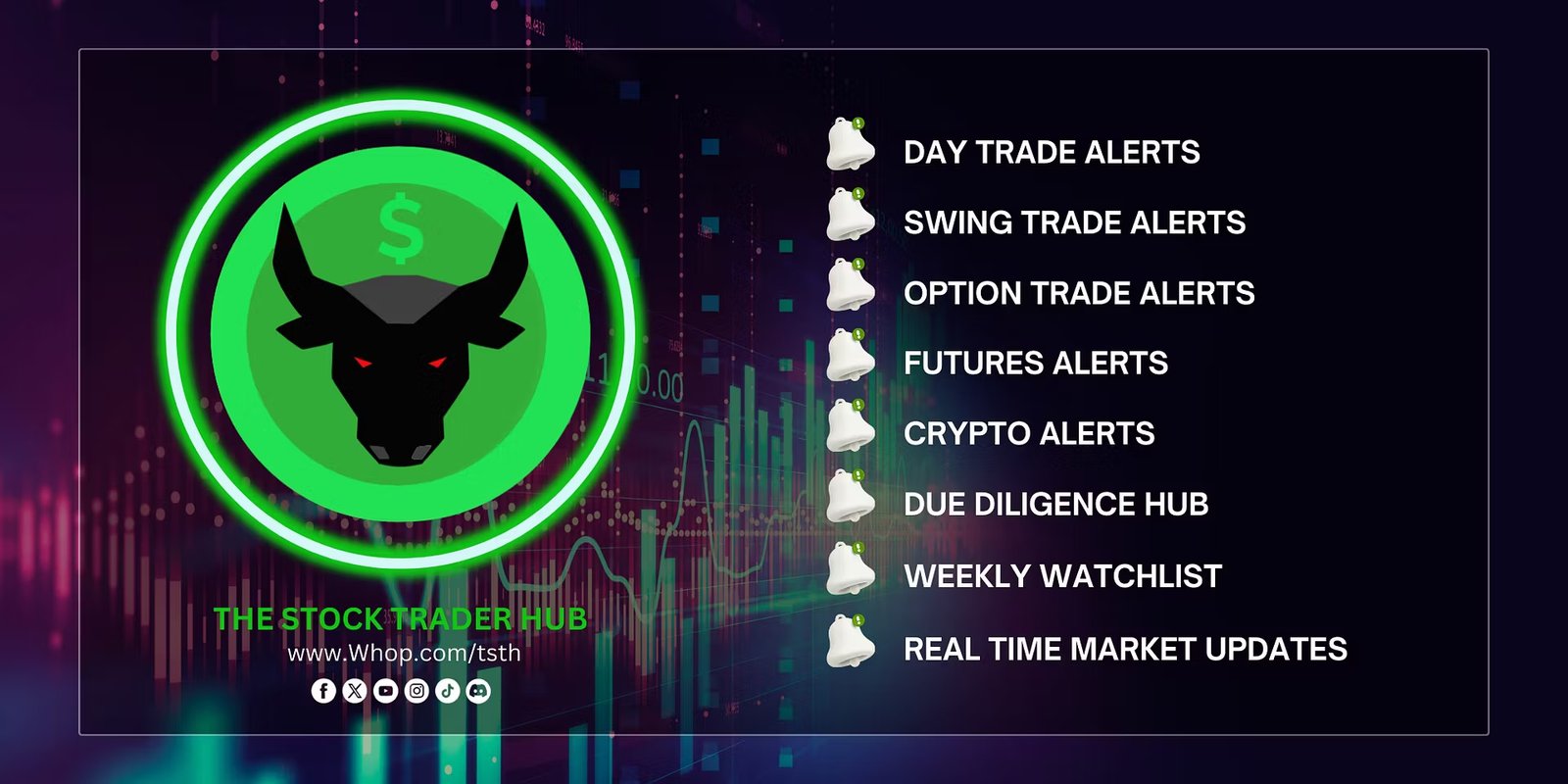
The TSTH ecosystem appears to include several practical trading layers. There are day trade alerts, swing trade alerts, options trade alerts, futures alerts, crypto alerts, a due diligence hub, weekly watchlists, and real-time market updates. There is also a buy/sell indicator product connected to TradingView-style chart support. A trader can use the room for idea flow, then use the indicator and their own chart review to decide whether the idea is worth attention.
That structure is useful because traders often have two separate problems. The first problem is discovery: they do not know what to watch. The second problem is decision quality: they do not know whether the idea is still clean when it reaches them. TSTH is more valuable when it helps with both. Alerts and watchlists help with discovery. The indicator, market analysis, and community discussion can help with decision context.
The due diligence and watchlist layers are important because they can slow the process down in a productive way. A fast alert may tell a trader what is moving, but a watchlist or research hub can explain why a name deserves attention before the move happens. That gives members a better chance to understand the setup instead of only reacting after momentum has already started.
Still, a trader should not confuse more information with better trading. The best use of TSTH is selective. A member should know which markets they care about, what setups match their plan, and how much risk they can take. The room can provide ideas and context, but the member has to filter.
For broader comparison, ProTradingInsights’ guide to top crypto trading Discord servers can help readers compare communities by alerts, education, market focus, and member support. The trading psychology guide is also a useful companion because any trading community works best when members already have rules for sizing, invalidation, and review.
II. What The TSTH Experience Is Built Around
A. Options alerts and market updates
The alert side is one of the clearest reasons traders look at TSTH. Options traders move in a market where timing, contract selection, volatility, and risk can change quickly. A room that sends alerts and market updates can help members stay aware of what is moving without having to watch every ticker alone.
That said, alerts are only useful if they are understood. A strong member should ask why the idea matters. Is the move tied to news, technical structure, unusual flow, support, resistance, trend continuation, or a volatility event? Is the idea a day trade, a swing trade, or a watchlist name? What would make the trade invalid? Those questions prevent alert dependency and make the room more educational.
Options traders also need to understand that the same underlying stock can produce very different outcomes depending on contract choice. An alert can point to an idea, but spread, expiration, volatility, and timing still matter. TSTH can be useful when members use alerts as the start of a decision process and then check whether the contract and risk profile fit their own rules.
B. Buy/sell indicator support
The buy/sell indicator angle gives TSTH a tool-based layer. For beginners, an indicator can make charts feel easier to read because it highlights potential direction and timing. For intermediate traders, it can become a confirmation layer. For advanced traders, it may be used as an additional signal to compare against a personal system.
The correct use is not to assume every indicator signal is a trade. Indicators can lag, fail, or trigger during messy conditions. A better approach is to combine the indicator with price structure, volume context, risk placement, and the broader market environment. If TSTH helps a member learn that process, the indicator becomes more than a colored signal on a chart.
A practical indicator workflow is to ask three questions before acting. Does the signal align with trend? Is the market environment supportive? Is the risk clear before entry? If the answer is unclear, the signal may still be useful as a watchlist cue, but it may not deserve immediate action. That distinction helps members use the tool with more discipline.
C. Watchlists and community discussion
Watchlists help traders focus. The market can be overwhelming, especially for people who trade options across multiple tickers. A weekly watchlist or market update can narrow attention to names that may matter. Community discussion then adds context around how other traders are thinking about those names.
The community room should be used with discipline. A trader who reads every message as urgent will become scattered. A trader who uses the room to compare ideas against a plan will get more value. TSTH is strongest when it helps members organize attention instead of increasing noise.
The best watchlist use is preparation. A member can mark important levels before the market opens, decide which names deserve attention, and then compare live alerts against that preparation. That makes the room feel less random because the member already has context before messages start moving quickly.
III. How It Can Help Different Types Of Traders
A. Beginner traders
Beginners can use TSTH to learn how alerts, watchlists, indicators, and market commentary connect. The room can help them understand terms like day trade alerts, swing trade alerts, option trade alerts, market updates, risk, trend, and confirmation. Seeing those concepts in a live community can make them easier to understand than reading definitions alone.
Newer traders should be careful with options. Options can move fast, and mistakes can become expensive. A beginner should focus first on learning why ideas are shared, how the indicator is being used, and what risk language appears around a trade. The goal is to build judgment before increasing activity.
B. Intermediate traders
Intermediate traders may use TSTH for idea flow and confirmation. They likely already understand basic charting and options mechanics, but they may need better organization. TSTH can help them find what to watch, compare alerts with their own charts, and decide which ideas fit their plan.
This group should also track outcomes. If a member follows TSTH ideas, they should journal the setup, entry reason, exit reason, and whether the indicator added useful context. That turns the membership into a learning loop rather than a stream of unreviewed trades.
C. Advanced traders
Advanced traders should treat TSTH as a supplemental market-flow tool. They may not need basic education, but they can still use alerts, watchlists, and indicator signals as a second opinion. The best advanced use is selective. Take the ideas that match your system and ignore the rest.
Experienced traders may also value the room for sentiment. Seeing what other traders are watching can reveal where attention is building. That does not mean the crowd is right. It simply adds another layer to the market read.
IV. Public Review Themes
Public review themes around TSTH are generally centered on consistency, options alerts, indicator usefulness, community value, and learning support. Several visible reviews mention the room as useful for options traders and newer traders, with comments pointing toward alerts that include reasoning and a more structured Discord experience.
The most useful review theme is structure. In trading communities, structure matters more than hype. If alerts include logic, if watchlists help narrow attention, and if the indicator is explained in a way that helps members think through risk, then the room can become educational. The review themes suggest that many members value TSTH for that combination of ideas and context.
There is also a realistic point to keep in mind. Every trading room will have members with different expectations. Some people want instant results. Some want education. Some want tools. TSTH will make the most sense for members who want a blend of alerts, indicator context, and community learning rather than a promise that every idea will work.
V. Who Fits Best
TSTH is a strong fit for traders who want an active stock and options room with alerts, watchlists, market updates, and indicator support. It is especially relevant for people who like having multiple layers of confirmation: a community idea, a chart, an indicator, and their own plan.
It can also fit traders who want to become more organized. Instead of scanning the entire market, a member can use watchlists and alerts to focus attention. That is valuable only if the member still filters the ideas. A watchlist should not become a command. It should become a research starting point.
A practical first week inside TSTH would be to watch how alerts are framed, study the indicator examples, and compare the room’s market updates with your own chart notes. Do not try to act on everything. Pick a small number of ideas and study the reasoning. Then review whether those ideas matched your rules.
It also helps to separate each feature into a role. Alerts can surface ideas. The indicator can help with chart context. Watchlists can guide preparation. Community discussion can add perspective. The due diligence hub can support research. When each feature has a role, the membership becomes easier to use and less overwhelming.
TSTH can also be useful for traders who need community energy. Trading alone can lead to tunnel vision. A room with active discussion can help members stay aware of broader market flow. The key is to stay selective and avoid treating every message as a trade.
If you want an options-focused community with alert flow, indicator support, and Discord discussion, TSTH is worth evaluating.
Final Take
TSTH stands out because it combines The Stock Trader Hub community with options alerts, market updates, watchlists, Discord discussion, and a buy/sell indicator. That gives traders several ways to find ideas and evaluate them.
The most important part is how those pieces work together. Alerts can help with discovery, watchlists can help with preparation, the indicator can help with confirmation, and community discussion can add market context. When a member separates those roles, TSTH becomes easier to use as a disciplined trading workflow.
That structure is the difference between chasing messages and building a repeatable trading process.
If you want an active room that can help organize stock and options ideas while giving you indicator context, TSTH is worth a closer look. The best member will use it as a decision-support layer and keep personal risk rules in control.
FAQ
What is TSTH?
TSTH is The Stock Trader Hub, a trading community connected to options alerts, market updates, Discord access, watchlists, education, and a buy/sell indicator.
Who is TSTH best for?
It is best for stock and options traders who want alert flow, market discussion, indicator context, and a community environment.
Does TSTH include a buy/sell indicator?
Yes. TSTH is connected to a buy/sell indicator that can be used as a chart-support layer alongside personal analysis and risk management.
Can TSTH guarantee profitable trades?
No. No trading community or indicator can guarantee results. Members should use TSTH for ideas, education, and context while making independent decisions.
How should I use TSTH if I join?
Use the alerts and watchlists as research starting points, compare ideas with your own charts, study the indicator context, and track your decisions in a trading journal.
