

This content is for informational and entertainment purposes only, not financial advice. Trading involves risk and is not suitable for all investors. This article may contain affiliate links, which means Pro Trading Insights may earn a commission if you sign up through a link. For full details, see our Affiliate Disclosure and Full Disclaimer.
Quick Verdict: Vector Indicator is a proprietary TradingView indicator from The Fractal Exchange and RogueMoose, built around a vector line that helps traders read directional bias, momentum, trend breaks, and potential reversion zones. It is most useful for traders who want a data-rich charting tool that supports market interpretation instead of a simple arrow-based signal feed.
Best fit: TradingView users, fractal-system traders, momentum traders, and chart-focused traders who want a cleaner way to visualize bias shifts and reversion areas while still making their own trade decisions.
Best Fit Snapshot
| Core benefit | TradingView-based visual bias, momentum, trend-break, and reversion-zone context using the VECTOR line and The Fractal Exchange framework. |
| Strongest reason to join | Vector Indicator can help chart-focused traders interpret momentum and bias changes faster without relying only on traditional lagging indicators. |
| Good match if | You already use TradingView, want more structure around bias and reversion, and are willing to learn how The Fractal Exchange system frames market behavior. |
| Best way to use it | Use the indicator as a chart interpretation layer, then confirm setups with market structure, risk rules, timeframe context, and your own trade plan. |
Table of Contents
- What Is Vector Indicator?
- The Vector Line, Bias, and Momentum
- Trend Breaks, Reversion Zones, and Fractal Context
- How Vector Indicator Fits a TradingView Workflow
- What Public Reviews Highlight
- How Different Traders Can Use Vector Indicator
- First-Week Plan for New Members
- Vector Indicator FAQ
- Final Take
I. What Is Vector Indicator?
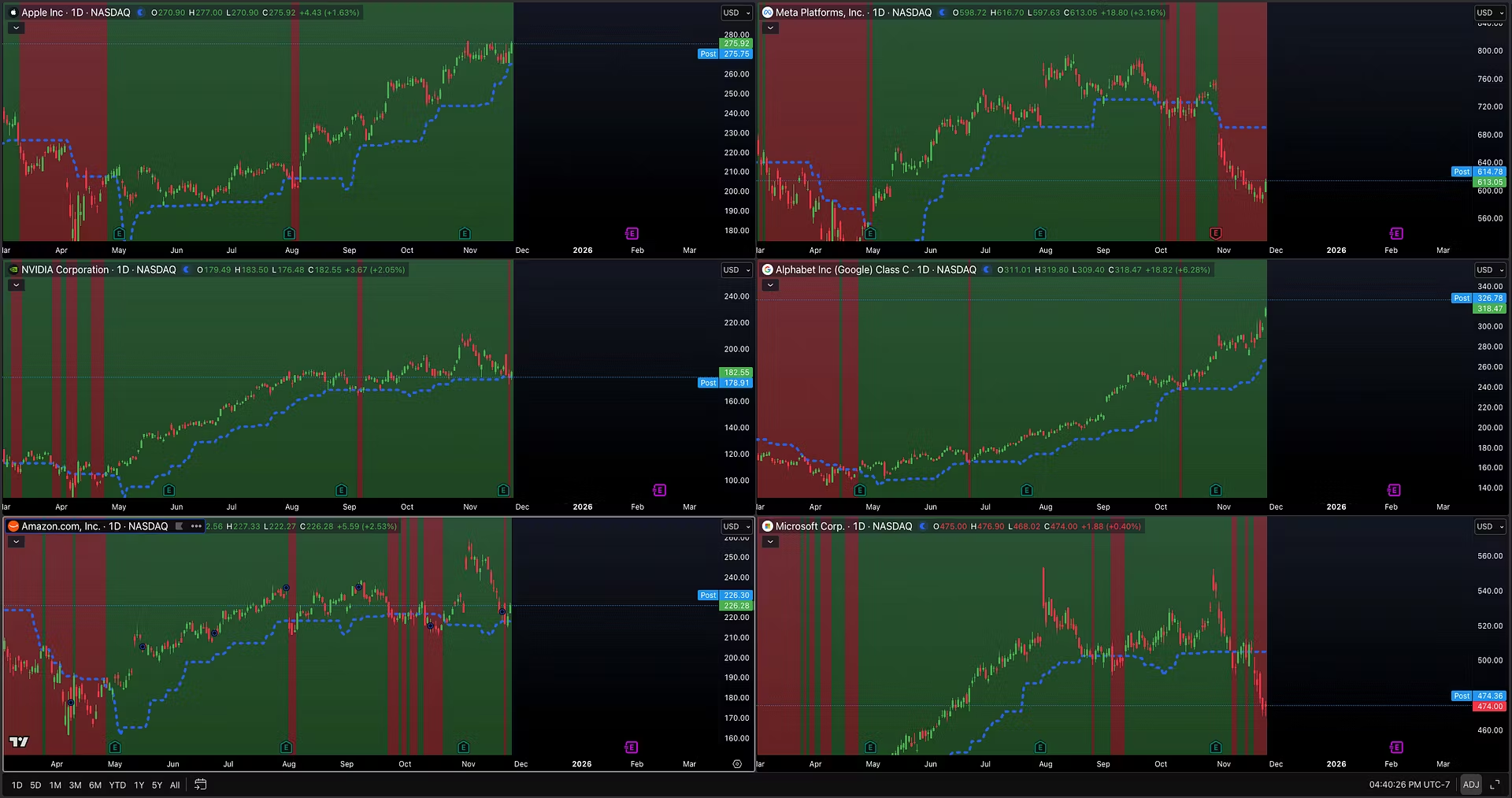
Vector Indicator is a TradingView indicator from The Fractal Exchange, connected with RogueMoose. It is built around a proprietary VECTOR line designed to help traders read directional bias, momentum, trend breaks, and reversion zones. In plain English, it gives traders a visual framework for understanding whether the chart is leaning with a trend, breaking from one condition into another, or approaching an area where price may mean-revert.
The indicator is not presented as a generic moving average crossover tool. Its positioning is built around an internal fractal routine and The Fractal Exchange system. That makes it more specific than a basic trend indicator. It is meant for traders who want a more data-driven way to study market behavior, not just a colored line that says buy or sell.
That is the right lens for this Vector Indicator review. The question is not whether a line appears on a chart. The question is whether the indicator can help a trader organize directional bias, momentum changes, and reversion context in a way that improves decision quality. For some TradingView users, that kind of structure can be valuable. For others, especially traders who want a completely mechanical signal, the tool may require more learning than expected.
Vector Indicator is also part of a broader Fractal Exchange ecosystem. That matters because the tool makes the most sense when a trader is willing to understand the system behind it. A trader who only wants one-click entries may miss the point. A trader who wants to interpret market behavior more clearly may get more from it.
A. Why a bias tool can matter
Directional bias is the trader’s read on the market’s current lean. Is the chart showing strength, weakness, compression, continuation, or reversal risk? Without a bias framework, traders can get pulled into every candle. One candle looks bullish, the next looks bearish, and the trade plan becomes reactive.
A bias tool can help by giving the trader a cleaner reference point. If the VECTOR line and visual zones suggest the market is still favoring one side, the trader can look for setups that align with that condition. If the chart begins to show a trend break or reversion zone, the trader can slow down and reassess.
B. Why it should not be treated as a standalone system
No indicator should replace a complete trading plan. Vector Indicator can help interpret direction, momentum, and reversion context, but it cannot decide position size, emotional discipline, account risk, or whether a specific setup is worth taking. The tool should support analysis, not override it.
This is especially important for newer traders. A colorful chart can feel convincing, but indicators are only useful when the trader understands what they show and what they do not show. Vector Indicator is best used as part of a structured workflow with market context, risk rules, and review.
II. The Vector Line, Bias, and Momentum
The most important concept inside Vector Indicator is the vector line. Think of it as the main visual guide for market bias and momentum. Instead of relying only on a traditional moving average, the VECTOR line is built around The Fractal Exchange’s internal fractal logic.
Traditional indicators can be helpful, but many of them lag because they are built from prior candles in a simple smoothing formula. A moving average, for example, can show trend direction, but it may react slowly when market behavior changes. Vector Indicator is designed to approach the chart differently by interpreting behavior through its own fractal routine.
A. Momentum context
Momentum tells a trader whether price is moving with force or losing energy. In practical terms, momentum helps answer questions such as: is the current move still strong, is the move slowing, is the market breaking from a prior condition, or is the chart stretched enough that a reversal or reversion becomes more likely?
Vector Indicator can help traders organize those questions visually. If the chart is showing clean directional behavior, the trader can focus on continuation ideas. If the chart is showing a shift, the trader can move from continuation thinking into caution or reversal planning.
B. Directional bias without blind entries
Directional bias does not mean automatic entry. A trader can have bullish bias and still wait for a better setup. A trader can have bearish bias and still avoid a late short. The value of bias is that it keeps the trader from forcing random trades in the wrong context.
Vector Indicator is useful when it helps a trader ask better questions. Is this move aligned with the current bias? Is price breaking the bias line? Is the chart entering a reversion zone? Is the move too extended? Those questions are more valuable than treating the indicator as a simple instruction.
For readers who want more background on the charting platform itself, PTI’s TradingView review explains why so many indicator products are built around TradingView workflows.
III. Trend Breaks, Reversion Zones, and Fractal Context
Vector Indicator is also built around trend breaks and reversion zones. These concepts are useful because traders often struggle at turning points. They either stay in continuation mode too long, or they anticipate reversal too early. A good indicator can help make those transitions easier to see.
A trend break occurs when the prior directional condition weakens or changes. That does not always mean a full reversal is coming. Sometimes it means the market is pausing. Sometimes it means a deeper pullback is developing. Sometimes it means the prior trend is ending. The trader still has to interpret the context.
A. Reversion zones in plain English
A reversion zone is an area where price may be stretched or where the market may pull back toward a more balanced condition. Traders use these zones to avoid chasing late moves and to prepare for potential reaction areas.
For example, if price has been moving strongly in one direction and the indicator begins to highlight a potential reversion area, a trader may avoid entering late. They may wait for confirmation, reduce aggressiveness, or look for a cleaner reset. The point is not to predict every reversal. The point is to recognize that the risk profile has changed.
B. Fractal context
Fractal-style market analysis looks for repeated structures and behavior patterns across price action. In a trading context, fractal logic can help identify how smaller movements connect to larger market behavior. Vector Indicator is built around that kind of framework rather than a generic moving average formula.
That makes the tool more interesting for traders who already think in structure, cycles, momentum shifts, and behavioral patterns. It may be less intuitive for someone who only wants a basic green/red signal. The more a trader is willing to learn the framework, the more useful the tool can become.
IV. How Vector Indicator Fits a TradingView Workflow
Vector Indicator should fit into a repeatable TradingView workflow. A strong workflow starts with context before the indicator is even considered. What market are you trading? What timeframe matters? Is the broader trend clean or choppy? Is volume or volatility supporting the move? Are major levels nearby?
After that, the indicator can help refine the read. The VECTOR line can guide bias. The zones can help identify momentum and possible reversion areas. The trader can then decide whether the setup is worth watching, whether it needs confirmation, or whether it should be skipped.
A. A practical chart routine
Start with the higher timeframe and mark the obvious structure. Identify major highs, lows, trend direction, and areas where price has reacted. Then move to the timeframe you actually trade and use Vector Indicator to compare its bias with your own read.
If the indicator aligns with your read, it can add confidence to the plan. If it disagrees, slow down. The disagreement may reveal something you missed, or it may simply mean the tool is reading a different part of market behavior. Either way, it gives you a reason to think before acting.
B. Risk rules still matter
A clean indicator does not make risk disappear. The trader still needs a stop plan, size plan, exit plan, and a rule for when to stop trading. This is especially true when using a tool that highlights momentum. Momentum can create fast moves, but fast moves can also reverse quickly.
For that side of the process, PTI’s guide to trading risk management strategies is a useful companion. Vector Indicator can help with chart interpretation, but risk management determines whether the process survives bad trades.
V. What Public Reviews Highlight
Public feedback around Vector Indicator points toward a few useful themes: data richness, the Fractal Exchange system, a different way of seeing the market, and the importance of interpretation. That last point matters. Reviews do not make the tool sound like a basic signal feed. They make it sound more like a framework traders need to learn.
| Public review theme | What it suggests for traders |
|---|---|
| Data-rich charting | The tool appears to appeal to traders who want more information on the chart, not fewer decision inputs. |
| Fractal-system learning | The strongest fit is likely traders who are willing to learn The Fractal Exchange framework rather than treat the tool as a generic overlay. |
| Market interpretation | Feedback points toward using the indicator to interpret market behavior, not blindly follow every visual change. |
| Momentum and bias clarity | The visual framework can help traders track when direction, trend behavior, or reversion risk is changing. |
That review pattern supports the main conversion case for Vector Indicator. The strongest reason to join is not that it gives effortless calls. The stronger reason is that it can help a chart-focused trader read market behavior with more structure.
VI. How Different Traders Can Use Vector Indicator
Vector Indicator can fit different trader profiles, but the use case changes by experience level.
A. Beginners learning structure
Beginners should use Vector Indicator slowly. The tool can help them see bias, momentum, and reversion visually, but they should avoid treating every color or line change as a trade. The first goal is to understand what the indicator is showing.
A beginner should choose one market and one timeframe, then study how the VECTOR line behaves during clean trends, choppy ranges, pullbacks, and reversals. That builds chart intuition before real risk is involved.
B. Intermediate traders refining entries
Intermediate traders may get the most immediate value. They already understand basic chart structure but want better confirmation around momentum and bias shifts. Vector Indicator can help them decide when a setup is aligned with the current condition and when the chart is too extended.
The best intermediate use is selective. Use the indicator to filter ideas, not to manufacture trades. If the vector line, structure, and risk/reward all align, the setup becomes more interesting. If only one element looks good, wait.
C. Advanced traders adding a data layer
Advanced traders can use Vector Indicator as an additional data layer. They may already have their own system for structure, liquidity, trend, and volatility. For them, the value is comparing the Fractal Exchange read against their own model.
An advanced trader should know when to ignore the tool. No indicator is perfect in every market condition. The advantage comes from knowing when the tool adds clarity and when the chart needs a cleaner setup.
VII. First-Week Plan for New Members
The first week with Vector Indicator should be focused on observation and learning. Start by adding the indicator to one familiar market on TradingView. Do not overload the chart with several other tools at the same time. The goal is to understand what the VECTOR line and visual zones are communicating.
Next, review historical sections of the chart. Look at clean trends, failed moves, strong momentum, and areas where price reverted. Ask what the indicator showed before, during, and after those moves. This creates a better sense of how the tool behaves in different conditions.
Then build a simple checklist. Before using the indicator in a live decision, confirm the timeframe, broader trend, major levels, vector bias, reversion risk, position size, and exit plan. If any of those pieces are unclear, skip the trade and keep studying.
Finally, save screenshots. Mark what you saw, what you thought the indicator suggested, and what happened next. Over time, that review process can help you learn whether Vector Indicator fits your trading style.
VIII. Vector Indicator FAQ
A. What is Vector Indicator?
Vector Indicator is a proprietary TradingView indicator from The Fractal Exchange and RogueMoose. It is built around the VECTOR line, directional bias, momentum, trend breaks, and reversion-zone context.
B. Is Vector Indicator built for TradingView?
Yes. Vector Indicator is positioned as a TradingView indicator. It is meant to support chart interpretation inside a TradingView workflow.
C. What does the VECTOR line show?
The VECTOR line is the core visual guide for bias and momentum. Traders can use it to study directional behavior, trend changes, and possible reversion context.
D. Is Vector Indicator a standalone trading system?
No. It should be used as an analysis tool. Traders still need market structure, risk rules, entry criteria, exit criteria, and a review process.
E. Who is Vector Indicator best for?
It is best for TradingView users who want a fractal-style indicator for bias, momentum, trend breaks, and reversion zones, and who are willing to learn the framework behind the tool.
F. Can beginners use Vector Indicator?
Beginners can use it as a learning tool, but they should start slowly and focus on understanding bias, momentum, and reversion behavior before making active trade decisions with it.
IX. Final Take
Vector Indicator is worth considering if you want a TradingView indicator that focuses on directional bias, momentum, trend breaks, reversion zones, and The Fractal Exchange’s chart framework. It is more useful for traders who want to interpret market behavior than for traders who want a simple signal arrow.
The strongest reason to join is chart clarity. Vector Indicator can help traders organize what they are seeing and compare the VECTOR line against trend, structure, and risk. The tool should still be used with a plan, because no indicator replaces position sizing, stop logic, exit planning, or trade review.
If you are searching for a Vector Indicator review, Fractal Exchange indicator review, RogueMoose Vector review, TradingView fractal indicator, vector line indicator, momentum indicator, trend break indicator, or reversion zone indicator, Vector Indicator is the specific Fractal Exchange tool to evaluate.
